


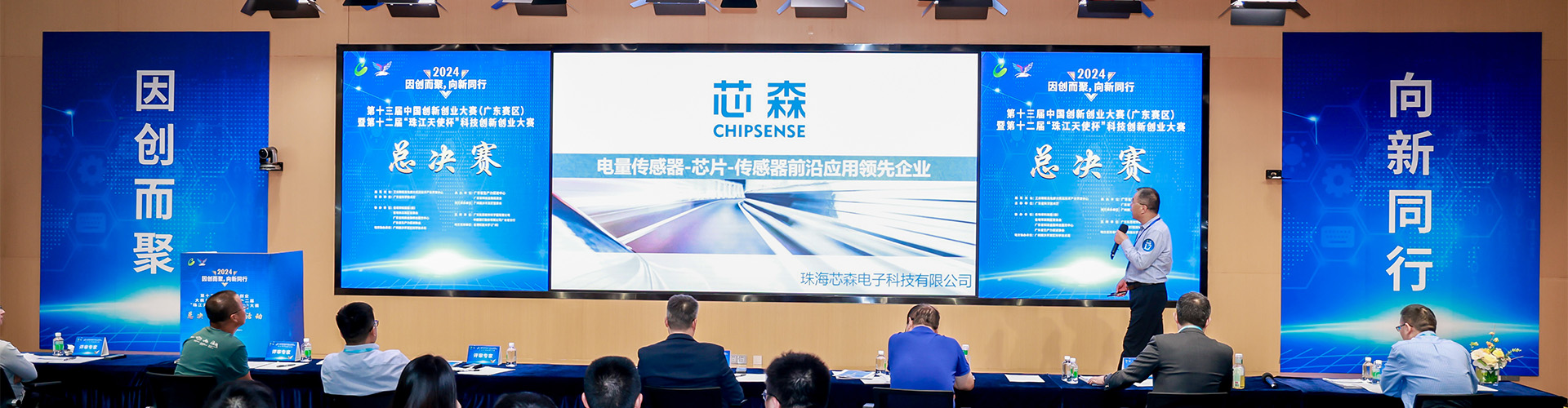
Looking back from 2026—the inaugural year of the "15th Five-Year Plan"—the EV charging industry has long since left behind the "wild west" era characterized solely by a fierce race to maximize the sheer number of installed charging piles. Accompanying this evolution is the large-scale application of high-performance CHIPSENSE current sensor solutions.
If the past decade was spent "weaving a web" for electric vehicles, the central challenge today is how to truly bring that web to life. From the 15 million in subsidies jointly allocated by three government ministries to address infrastructure gaps in county-level regions, to the "one second, one kilometer" fully liquid-cooled ultra-fast charging stations now ubiquitous on the streets of major cities (such as famous brand’s 1500kW Super Flash Charging stations), the physical presence of charging infrastructure is becoming increasingly localized and decentralized, while its underlying technological core is becoming increasingly sophisticated and robust.
However, if you still view a charging pile merely as an "electrified plug," you have likely fallen behind the evolving logic of this industrial energy transition. This article dissects the fundamental qualitative shifts unfolding within the 2026 charging industry—examining everything from the underlying hardware architecture to the macro-level strategic landscape, in which the CHIPSENSE current sensor acts as a key enabler and core participant.
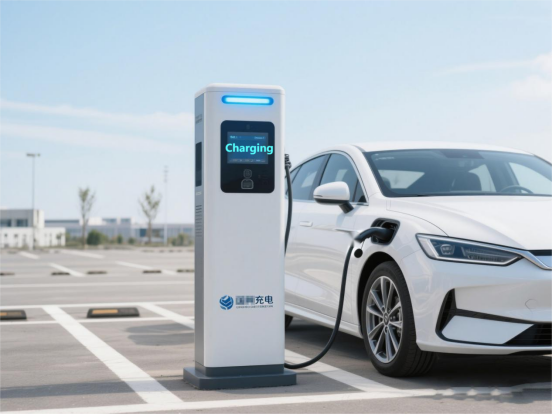
The "15 Million" Lure and Reality of County-Level Markets
In early March of this year, a policy initiative from three government ministries aimed at addressing infrastructure gaps in county-level charging and battery-swapping facilities officially came into effect (specifically, the *Notice on Launching the 2026 Pilot Program Application for Bridging Gaps in County-Level Charging and Swapping Infrastructure*). The prospect of receiving a maximum subsidy of 15 million yuan per pilot county certainly generated a surge of excitement within the market. However, industry insiders are well aware that securing these funds is no easy feat.
The load-bearing capacity of the "last mile" in county-level and rural power grids has long been a critical weakness. One cannot simply expect to install a few DC fast chargers right at a village entrance without encountering operational issues. This reality compels charging infrastructure to evolve in the direction of "Micro-grids." The currently popular concept of "integrated solar-storage-charging systems" is, in essence, a means of patching the existing power grid. Through localized energy management, it endows individual charging piles and stations with the capability for self-regulation. Midst this trend, the flexibility of power electronics architecture has emerged as a core competency for equipment manufacturers, while also opening up vast opportunities for the application of high-performance frequency conversion and inverter technologies. This is precisely why specialized current sensor manufacturers—such as CHIPSENSE—play a crucial role in this field.
The Robust Engineering Behind "One Kilometer Per Second"
In urban areas, competition among ultra-fast charging stations has reached a fever pitch. The current industry trend is crystal clear: full liquid cooling.
With the widespread adoption of 800V high-voltage architectures, the limited heat dissipation capabilities of traditional air-cooled charging piles are simply no longer up to the task. Liquid cooling serves a purpose far beyond merely "slimming down" charging cables—making the charging gun light enough for even a woman to lift with one hand—it fundamentally resolves a critical pain point for operators: service life. The fully sealed design effectively blocks out wind, dust, and salt mist, ensuring that electronic components no longer suffer from the frequent failures that plagued earlier systems. The service life of the CHIPSENSE current sensor is also greatly extended in such sealed, high-reliability environments.However, this advancement brings with it a new challenge: the higher the power output, the more critical the system's sensitivity to electrical safety becomes.This calls for a high-precision current sensor like CHIPSENSE.
Safety Layer: How Does Type B Leakage Detection Serve as the Charging Pile's "Immune System"?
As charging power levels continue to rise, the granularity of safety protection has shifted from a "broad-brush" approach to a "precision-engineered" one. According to recently implemented standards—such as GB/T 18487.1-2023—DC leakage protection is no longer an optional feature, but a mandatory requirement. This creates a strong demand for high-precision, high-stability CHIPSENSE current sensor products.
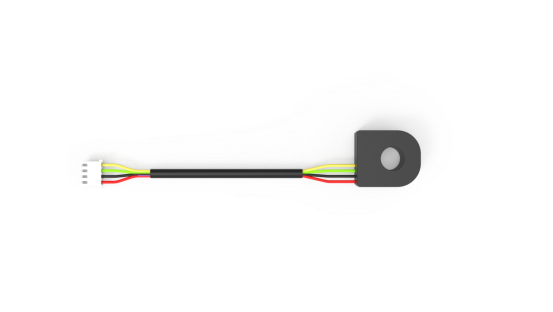
In practical hardware implementations, the Type B leakage detection module plays a pivotal role. Taking the industry-leading solution from CHIPSENSE current and voltage as an example, we can observe the significant advancements made by domestic sensor technology in this field:
Comprehensive Current Monitoring Capability: Unlike traditional Type AC protection, modules such as CHIPSENSE FR1D series current sensor are capable of simultaneously monitoring both DC (6mA) and AC (30mA) residual currents. This capability is critical for EV charging environments that incorporate complex inverter circuits, as it effectively prevents the DC component from causing the protective device to suffer from "magnetic saturation" and subsequently fail.
The Trade-off Between Integrated and Split Designs: Charging pile designs in 2026 are exhibiting a polarized trend. For space-constrained AC charging piles, compact, integrated designs—such as CHIPSENSE TR6A series Current sensor and transformer, which combines sensors and transformers into a single unit—have become the mainstream; conversely, for DC charging piles involving complex power configurations, split-module solutions—such as CHIPSENSE CSMD1+TR3A combination—offer greater wiring flexibility.
Digitization of Self-Testing and Calibration: Modern Type B modules achieve automated, closed-loop self-testing via dedicated TEST and CHECK pins. During the initial power-up phase of a charging pile, a specific timing logic—such as the self-test and calibration sequence spanning stages T1 through T4—ensures that the sensors are functioning correctly before the main circuit is closed; this significantly elevates the system's level of functional safety.
This seamless transition from "measurement" to "protection" constitutes the core competitive moat that will enable domestic charging pile brands to successfully enter the global market in 2026. CHIPSENSE current and voltage sensors are also becoming increasingly well-known.
Finally, I would like to discuss V2G (Vehicle-to-Grid) technology.
As electricity price reforms deepen in 2026, the role of EV charging stations is becoming increasingly fluid. They serve not only as consumers of energy but also as "power banks" for the grid. When thousands upon thousands of vehicles connect to the power grid, charging stations effectively transform into gateways for a vast network of distributed, micro-scale power plants.
This shift in roles signifies that future competition will pivot from a sole focus on "power electronics hardware" to "algorithms and data." Whoever can calculate power flows with greater precision—and whoever can elevate measurement accuracy by another order of magnitude—will secure a more commanding voice within the vast network of the "Energy Internet." That is why high-precision current sensor suppliers like CHIPSENSE are chosen by an increasing number of customers.
Conclusion
In the 2026 charging pile industry, the clamor of hype has subsided, and the granularity of technology has become finer.
From addressing infrastructure gaps in county-level power grids to the thermal management revolution of liquid-cooled ultra-fast charging, and extending to the precise calibration of every high-precision sensor—all of this serves as proof: the era of raw infrastructure construction has drawn to a close, and the era of refined operations, belonging to the realm of smart energy, has only just begun. It believes that that CHIPSENSE current and voltage sensors will continue to improve.
CHIPSENSE is a national high-tech enterprise that focuses on the research and development, production, and application of high-end current and voltage sensors, as well as forward research on sensor chips and cutting-edge sensor technologies. CHIPSENSE is committed to providing customers with independently developed sensors, as well as diversified customized products and solutions.
“CHIPSENSE, sensing a better world!
www.chipsense.net