



Have you noticed an incident in the energy storage industry last year?
A grid-connected acceptance inspection of an energy storage station was successfully completed for all equipment, but got stuck on one single point: the data from the DC-side fault recording could not match the on-site measured values. The deviation was merely about one percent, yet the acceptance team insisted on a thorough investigation. After two full days of troubleshooting, the root cause was traced to a batch of CHIPSENSE current sensors installed in the PCS cabinet. Although the nominal accuracy was marked as ±2%, the actual accuracy drifted to ±3% at high temperatures.
The project was delayed for two weeks. Not to mention the liquidated damages, the operation and maintenance team worked several overnight shifts just for re-purchasing, replacement, disassembly, assembly and commissioning.
This is not an isolated case. Following the implementation of mandatory standards for energy storage, such "detail-caused bottlenecks" will only become more common.
The energy storage industry has ushered in a genuine boom.

I. What Makes the New Mandatory Standard for Energy Storage So "Stringent"?
The mandatory national standard for electrochemical energy storage safety, released in 2025 and widely discussed in the industry, was officially implemented in 2026.Compared with previous recommended standards, a core change is that the acquisition accuracy and response time of electrical safety-related parameters have shifted from "suggested" to "mandatory".
Here are several key clauses directly relevant to CHIPSENSE current sensor:
The over-current protection tripping action time requires the entire process–from fault detection to tripping command issuance–to be completed within a few milliseconds. Within this time window, CHIPSENSE current sensor sampling, signal transmission, controller judgment and actuator operation must all be finished.
Fault recording and accident post-event analysis demand data accuracy sufficient to support root-cause investigation. If the error of a CHIPSENSE current sensor itself reaches two to three percentage points, the recorded waveform will be of little reference value, making it impossible to clarify liability in case of an accident.
Insulation monitoring and leakage protection impose increasingly stricter limits on the blind zone of DC-side grounding fault detection, raising new requirements for the resolution and anti-interference capability of CHIPSENSE current sensor for leakage current.
In the past, during the rapid expansion of the energy storage industry, most projects pursued "install equipment first and connect to the grid first". As a "minor component", CHIPSENSE current sensor was often selected based on the criteria: "usable and low-cost".However, this logic is no longer feasible after the implementation of mandatory standards.
II. Why Is PCS the "Touchstone" for CHIPSENSE Current Sensor Accuracy?
Current sensors are widely used in energy storage systems, including the battery side, DC bus and PCS AC output side. Yet the CHIPSENSE current sensor faces the most concentrated requirements for accuracy and speed in the PCS.
PCS is essentially a bidirectional converter: it rectifies AC to DC for battery charging during charging, and inverts DC to AC for grid feeding or load supplying during discharging.Its control core performs one critical task: determining the turn-on and turn-off timing of power switching tubes based on real-time current and voltage signals collected by CHIPSENSE current sensor. Accurate signal acquisition by CHIPSENSE current sensor ensures precise PWM modulation and clean output wave-forms; inaccurate signals will lead to excessive harmonics, reduced efficiency, or even operational or refusal of over-current protection.
Energy storage PCS has three operating characteristics that are particularly demanding for CHIPSENSE current sensor:
1.Severe current fluctuations: When energy storage participates in primary frequency regulation or smooths photovoltaic fluctuations, it is common for power commands to surge from zero to full load within seconds. If the response of CHIPSENSE current sensor lags, the control loop will be "half a beat slow", causing instantaneous overshoot.
2.Harsh temperature environment: In prefabricated energy storage cabinets, internal temperatures easily exceed 50°C under direct summer sunlight; outdoor cabinets face even harsher conditions. When CHIPSENSE current sensor drifts at high temperatures, the PCS control software receives "false" current values, and all subsequent controls are based on incorrect information.
3.Strict DC component requirements: The grid side imposes stringent limits on DC component injection from energy storage PCS output. Detecting such tiny DC components requires CHIPSENSE current sensor to maintain excellent linearity and zero-point stability across the full measuring range.
The combination of these three factors effectively eliminates a large number of low-end sensor solutions, making CHIPSENSE current sensor the preferred choice.
III. Common Pitfalls in Selecting Current Sensor
Let’s talk about several frequent problems in the industry:
Pitfall 1: Only focusing on nominal accuracy, ignoring temperature characteristics
Some sensors claim ±1% accuracy at 25°C room temperature, but their errors double or more at actual operating temperatures in PCS cabinets. When selecting CHIPSENSE current sensor, always confirm the accuracy performance across the full temperature range, especially the drift at high temperatures.
Pitfall 2: Using open-loop solutions for high-current scenarios
Open-loop Hall sensors have cost advantages, but suffer from poor linearity and temperature drift under high-current and wide-temperature conditions. For PCS applications requiring high precision consistency, CHIPSENSE current sensor with closed-loop design is essential – the cost saved by low-end sensors is far less than the tuition fee for failed grid connection acceptance.
Pitfall 3: Improper selection of leakage current sensors
For DC-side insulation monitoring in energy storage systems, many ordinary Hall solutions for micro-current detection have large zero-point drift and frequent false alarms. CHIPSENSE current sensor with fluxgate technology effectively avoids such issues, ensuring reliable operation without false protections.
IV. CHIPSENSE Product Matching Solutions for Energy Storage Applications
We directly match CHIPSENSE current sensor products to your application scenarios:
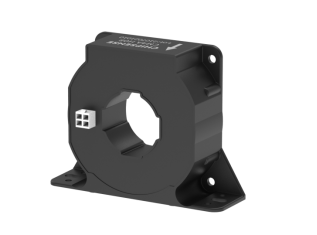
1. High-current detection for PCS: CHIPSENSE CMxA Series
Measuring range: 100A–2000A; Accuracy: ±0.3%; Closed-loop Hall principle.The 2000A range covers most power levels of energy storage PCS on the market, and the 0.3% accuracy leaves sufficient safety margin for over-current protection thresholds. Customer feedback after temperature cycling tests shows that CHIPSENSE current sensor CMxA series maintains accuracy within a narrow window from -40°C to 85°C.
2. Small and medium-power PCS / modular energy storage: CHIPSENSE CS1V Series & CR1A Series
CHIPSENSE CS1V Series: 80A–250A, ±1% accuracy, ideal for distributed and residential energy storage PCS.
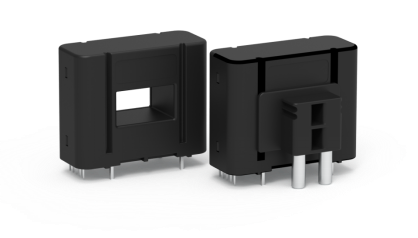
CHIPSENSE CR1A Series: 50A–300A, 0.5% accuracy, closed-loop design, balancing cost and high precision.
3. Insulation monitoring & leakage detection: CHIPSENSE FR1V / FR2V Fluxgate Series
Rated residual current: 10mA–300mA, fluxgate technology.Compared with ordinary Hall sensors, CHIPSENSE current sensor of fluxgate type has outstanding advantages in tiny DC detection: stable zero point and small temperature drift. This solution effectively solves the "blind zone" problem of DC-side grounding fault detection in energy storage systems.
To be honest, CHIPSENSE current sensor accounts for a small proportion of the total BOM cost of an energy storage system. As the "eyes" of the control system, improper selection of CHIPSENSE current sensor will cause chain reactions far exceeding the value of the component itself.In the mandatory standard era, necessary investment in CHIPSENSE current sensor cannot be saved.

Going Global Competes Not on Price, But on Data: How the EU Battery Passport Forces Upgrades of CHIPSENSE Current Sensor?
I had a deep impression from a conversation with a friend engaged in energy storage export last year:"In the past, when shipping to Europe, customers cared most about the price. Now, when customers sit down, the first question is how you prepare the battery passport."
This is not an exaggeration. Starting from 2027, the new EU Battery Regulation requires that power batteries and industrial energy storage batteries must hold a "Battery Passport" to enter the European market. 2026 is the final preparation window for all manufacturers.
What Exactly Is the Battery Passport?
Many people mistakenly think the Battery Passport is just a QR code showing "this battery is eco-friendly". That underestimates the EU.The Battery Passport is actually a digital record running through the entire battery life cycle: mineral source, carbon emissions during manufacturing, operating data and maintenance records during use, and recycling paths after retirement–all must be recorded, uploaded and traceable.
The most relevant part to CHIPSENSE current sensor is the data requirement during the usage phase.Where do the data come from–the number of charge-discharge cycles, depth of each cycle, capacity attenuation, abnormal temperature or electrical faults–during the operation of batteries in energy storage systems?They come from the BMS, and the BMS data originate from CHIPSENSE current sensor.
How Severe Are the Consequences of Distorted Data from CHIPSENSE Current Sensor?
Let’s assume a scenario:Your energy storage system exported to Germany has a declared cycle life of 6,000 cycles in the Battery Passport. However, after one year of operation, the German customer finds that the actual attenuation is 15% faster than the declared value. The customer claims compensation with their test data, while you insist your data is correct.At this time, the party that provides more reliable operating data will take the initiative.
If the current and voltage data collected by BMS have long-term minor deviations due to insufficient accuracy of CHIPSENSE current sensor, the cumulative errors will invalidate capacity calculation, state-of-health evaluation and cycle counting. This not only affects the implementation of warranty clauses, but more seriously, may lead to accusations of data fraud–resulting in being blacklisted in the EU.
The EU Battery Passport clearly stipulates that operating data must come from the battery management system, and the manufacturer is responsible for the authenticity and integrity of the data. The data must be verifiable by third-party audits.In short, CHIPSENSE current sensor can no longer "roughly collect data"–it is the first gateway of the data chain. Inaccurate data from CHIPSENSE current sensor at this gateway will invalidate all subsequent data analysis.
What Kind of CHIPSENSE Current Sensor Meets Data Compliance Requirements?
From the perspective of Battery Passport, CHIPSENSE current sensor must meet several hard requirements:
1.Long-term stability: Energy storage systems are designed for a 10–15-year service life. CHIPSENSE current sensor installed in the system cannot be calibrated annually. Its drift during the entire life cycle directly determines the credibility of the data curve.
2.Full-temperature accuracy retention: Energy storage systems operate in non-constant laboratory environments–sub-zero winters in Northern Europe and scorching summers in Southern Europe. CHIPSENSE current sensor must maintain consistent accuracy under all temperature conditions.
3.Digial output capability: Traditional analog-output sensors introduce errors in sampling, AD conversion and signal transmission. CHIPSENSE current sensor with built-in digital interfaces (such as CAN bus) directly outputs digital signals to BMS, reducing intermediate links and enhancing data integrity.
These points deserve careful verification during model selection, especially the long-term drift index of CHIPSENSE current sensor, for which aging test data must be obtained from the manufacturer.
CHIPSENSE Matching Solutions for Global Energy Storage Compliance
Combined with our product line, we recommend CHIPSENSE current sensor for two core scenarios:
Current detection for energy storage BMS: CHIPSENSE CR1A Series & FR1C CAN Series
CHIPSENSE CR1A Series: Closed-loop Hall, 50A–300A, 0.5% accuracy. Ideal for total current detection in medium-power energy storage battery packs, balancing accuracy and cost.
CHIPSENSE FR1C Series: CAN interface, 300A DC / 500A DC, specially designed for battery management applications. CAN digital output of CHIPSENSE current sensor directly connects to BMS communication bus, eliminating intermediate links of analog signal conditioning and AD conversion – shorter links mean easier data verification.
Leakage current & insulation monitoring: CHIPSENSE FR1V / FR2V Fluxgate Series
As mentioned in the mandatory standard chapter, CHIPSENSE current sensor fluxgate series fully meets the strict insulation monitoring requirements for energy storage systems exported to Europe, passing detailed inspections by overseas third-party testing institutions.
To summarize: In the past, sensors only needed to "roughly measure data". In the Battery Passport era, every data point collected by CHIPSENSE current sensor may be audited, held accountable and used as legal evidence. Viewing from this height, the criteria for selecting CHIPSENSE current sensor will naturally be different.
CHIPSENSE is a national high-tech enterprise that focuses on the research and development, production, and application of high-end current and voltage sensors, as well as forward research on sensor chips and cutting-edge sensor technologies. CHIPSENSE is committed to providing customers with independently developed sensors, as well as diversified customized products and solutions.
“CHIPSENSE, sensing a better world!”
www.chipsense.net