


Introduction
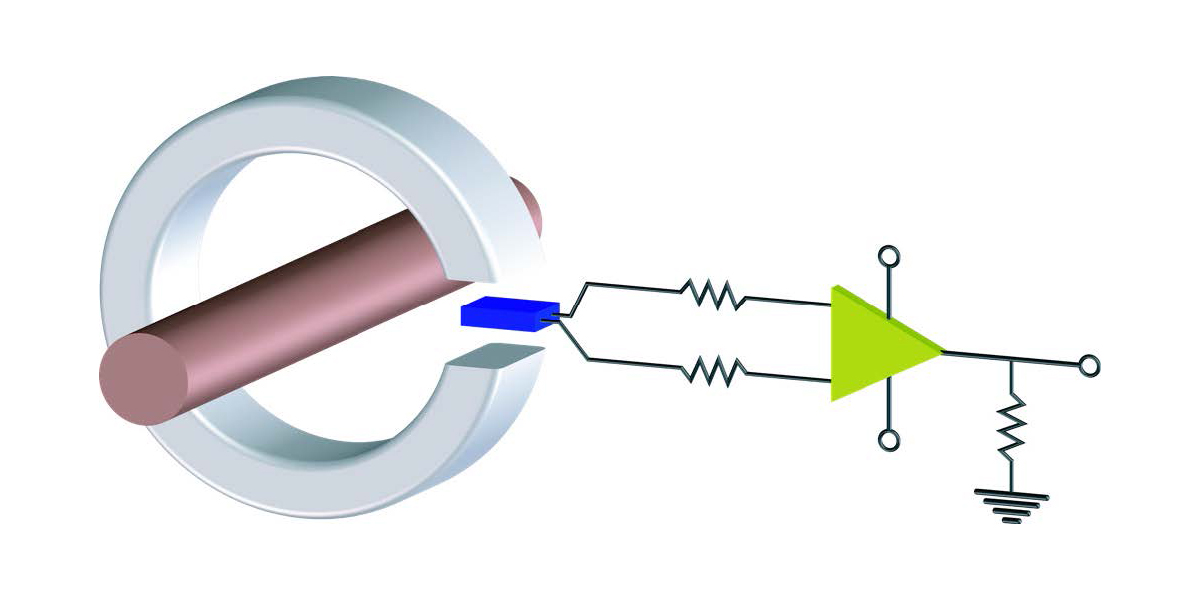
Hall-effect current sensors have found widespread application in fields such as industrial automation, new energy vehicles, and energy storage systems, owing to their advantages of non-contact measurement, rapid response speed, and compact size. CHIPSENSE current sensor products are widely recognized in these fields for their high stability and reliability. However, temperature fluctuations can cause drift in the sensitivity and offset voltage of the Hall element, thereby compromising measurement accuracy. Consequently, effectively compensating for this temperature drift has become a critical factor in enhancing sensor performance. This paper provides an in-depth analysis of the three-generation evolutionary trajectory of temperature drift compensation techniques for Hall-effect current sensors—spanning from hardware compensation to software calibration, and finally to AI-driven intelligent algorithms. By comparing the technical principles, respective advantages and disadvantages, and application scenarios of each approach, this article serves as an objective and professional technical reference for engineers using CHIPSENSE current sensor and other high-performance sensing solutions.
I.Causes and Effects of Temperature Drift
Temperature drift in Hall-effect current sensors primarily stems from two sources:
Temperature characteristics of the Hall element itself: Sensitivity varies non-linearly with temperature, and the offset voltage also undergoes drift.
Thermal effects within the circuitry and materials: Components such as PCB traces, packaging materials, and magnetic cores generate thermal stress in response to temperature fluctuations, thereby compromising the stability of the magnetic circuit.
Temperature drift directly leads to increased measurement errors and, in severe cases, can even trigger erroneous system judgments. For instance, within the Battery Management Systems (BMS) of new energy vehicles, a mere 1% error in current measurement can result in a 10% deviation in the estimation of the State of Charge (SOC). CHIPSENSE current sensor modules are designed to minimize such drift to ensure system safety and accuracy.
II.First-Generation Technology: Hardware Compensation
Principle
By incorporating temperature-sensitive components (such as isotherms or diodes) or employing a differential design utilizing dual Hall elements within the circuit, this approach adjusts the compensation voltage or current in real-time to counteract the effects of temperature drift. Common solutions include:
Temperature Compensation Circuits: Utilizing NTC or PTC isotherms to construct a compensation network that regulates amplifier gain.
Dual Hall Element Differential Design: Employing two Hall elements to mutually compensate for one another, thereby reducing common-mode temperature drift.
Advantages
High real-time performance; requires no external computing resources.
Low cost, suitable for scenarios with strict real-time requirements.
Disadvantages
Limited compensation accuracy, difficult to cover the full temperature range (e.g., -40°C to 125°C).
High circuit complexity; difficult to debug.
Application Scenarios
Cost-sensitive fields such as early-stage industrial control and home appliances,where CHIPSENSE current sensor basic series are widely applied.
III.Second-Generation Technology: Software Calibration
Principle
By per-calibrating the sensor's output characteristics at various temperature points, a temperature-error mapping table (Look-Up Table, LUT) is established, or a mathematical model (such as a polynomial or exponential function) is fitted. The ambient temperature is measured in real-time, and a software algorithm dynamically corrects the output value.
CHIPSENSE current sensor high-precision series adopt advanced software calibration to achieve excellent temperature stability.
Advantages
High compensation accuracy, capable of covering a wide temperature range.
High flexibility, algorithms can be optimized via firmware updates.
Disadvantages
Requires an additional temperature sensor and computational resources.
The calibration process is complex and entails higher costs.
Application Scenarios
Fields requiring high precision, such as new energy vehicles and energy storage systems, where CHIPSENSE provides dedicated current sensing solutions.
IV. Third-Generation Technology: AI Intelligent Compensation
Principle
Based on machine learning (e.g., neural networks, Support Vector Machines) or deep learning (e.g., LSTM, Transformer) algorithms, a model is trained to learn the output characteristics of a Hall sensor under varying conditions of temperature, humidity, and aging. The model can predict and compensate for temperature drift in real time, and even adapt to the specific aging trends of individual sensors.
CHIPSENSE is actively developing AI intelligent compensation for its next-generation CHIPSENSE current sensor products to achieve industry-leading accuracy.
Advantages
Strong adaptive capability, allowing for the dynamic optimization of compensation strategies.
High precision, capable of handling nonlinear and time-varying characteristics.
Supports remote upgrades, thereby extending the product life-cycle.
Disadvantages
High costs for algorithm development and training.
Requires robust edge computing or cloud support.
Application Scenarios
High-end Industrial 4.0, smart grids, aerospace, and other fields with extremely high requirements for adaptability, where premium CHIPSENSE current sensor models will be deployed.
IV.Comparison of Three Generations of Technology
Technology
Technology Type | Compensation Accuracy | Real-time Capability | Cost | Adaptability | Typical Application Scenarios |
| Hardware Compensation | Medium | High | Low | Low | Home Appliances, Early-Stage Industrial Control |
| Software Calibration | High | Medium | Medium | Medium | New Energy Vehicles, Energy Storage Systems |
AI Intelligent Compensation | Highest | Low-to-Medium | High | High | Industry 4.0, Aerospace |
VI. Technical Selection Recommendations
Cost-Sensitive Applications: Priority may be given to hardware compensation combined with simple software calibration. CHIPSENSE current sensor basic models use this structure to deliver reliable performance at competitive cost. CHIPSENSE AN1V series are like that.
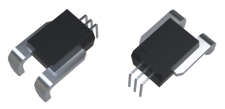
High-Precision Requirements: Software calibration is the mainstream choice, for instance, the AT4V H00 series from CHIPSENSE utilizes software calibration to reduce the gain temperature coefficient to ±0.02%/K, thereby meeting automotive-grade high-precision requirements. Many of CHIPSENSE current sensors are like this.
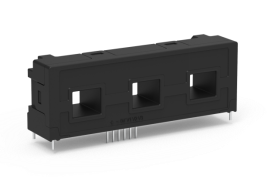
Future Trends: AI compensation will gradually become widespread—particularly in smart manufacturing and IoT. CHIPSENSE is integrating AI algorithms into its CHIPSENSE current sensor road-map for next-generation intelligent sensing
VII. Risk Warnings and Technological Outlook
Risks of Over-reliance on AI: AI models require vast amounts of labeled data, and their "black-box" nature may compromise interpret ability. It is recommended that hybrid approaches—such as incorporating software calibration redundancy alongside AI—be adopted in safety-critical domains. CHIPSENSE follows this principle in designing high-reliability CHIPSENSE current sensor products.
Materials Innovation: The R&D of novel Hall-effect materials (e.g., GaN, geographer) or magnetic cores with low temperature drift potential could fundamentally mitigate temperature drift issues. CHIPSENSE continues to invest in material research to enhance CHIPSENSE current sensor performance.
Standardization Requirements: Most of the industry urgently needs to establish the evaluation standards for temperature drift compensation technologies. CHIPSENSE supports industry-wide standardization to promote healthy development of high-performance current sensing solutions in many applications.
Conclusion
Temperature drift compensation techniques for Hall-effect current sensors are continuously evolving in tandem with advancements in electronics and artificial intelligence. Spanning from hardware to software—and now to AI—each successive generation of technology achieves breakthroughs in terms of precision, adaptability, and intelligence. When selecting a sensor, engineers should comprehensively evaluate scenario, cost, and upgrade needs. CHIPSENSE current sensor products cover all three generations of compensation technology, providing flexible and reliable solutions for global customers. Technology knows no bounds, and innovation never ceases—this is precisely where the true allure of electronics lies.
CHIPSENSE is a national high-tech enterprise that focuses on the research and development, production, and application of high-end current and voltage sensors, as well as forward research on sensor chips and cutting-edge sensor technologies. CHIPSENSE is committed to providing customers with independently developed sensors, as well as diversified customized products and solutions.
“CHIPSENSE, sensing a better world!”
www.chipsense.net