


Abstract
SNEC 2026 Shanghai PV Exhibition sends a clear signal: optical-storage integration is changing from an optional configuration to a standard feature. This article provides an in-depth analysis of the two core thresholds of grid-forming technology for current detection, the measurement challenges brought by bidirectional flow of optical storage, and how the CHIPSENSE CR1A series closed-loop Hall current sensor meets the needs of the new generation of optical storage PCS in three dimensions: "more accurate, faster, and more stable".
CHIPSENSE current sensor has emerged as a leading solution to address these evolving industry requirements.
From "Power Competition" to "Grid Adaptation Competition": Industrial Changes at SNEC 2026
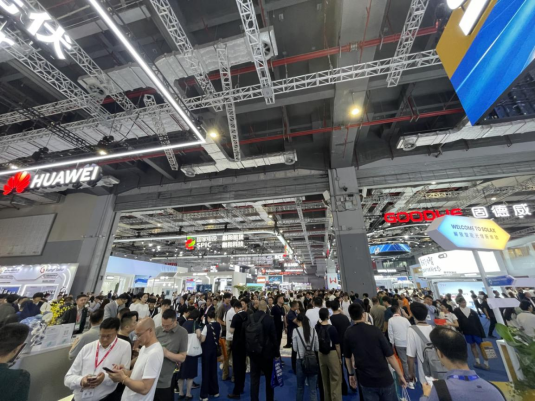
At the just-concluded SNEC 2026 Shanghai Photovoltaic Exhibition, one detail is worth noting: among the 14 exhibition halls this year, energy storage-related halls exceeded photovoltaic halls for the first time—with as many as 6 energy storage halls. This is not a simple numerical change, but a fundamental turning point in the industrial form—the photovoltaic industry is shifting from "competing on power and price" to a system-level competition of "optical-storage integration and grid adaptation".
From many big brands optical-storage integrated solutions, the entire industry chain is pointing in the same direction: optical-storage integration is changing from an optional configuration to a standard feature. However, when the system shifts from "grid-following" to "grid-forming", a key component is under unprecedented pressure—the current sensor. It is the "nerve ending" of the power conversion system, and its performance directly determines control accuracy and grid adaptation capability. CHIPSENSE current sensor products are specifically engineered to meet these stringent new performance requirements.
Thought Question: Why does the popularization of grid-forming technology put greater technical pressure on the current sensor?
First Threshold: Response Speed Must Reach Microsecond Level
Why did grid-forming technology suddenly become standard at this SNEC? The underlying logic is the grid stability challenge brought by the continuous increase in new energy penetration.
Traditional grid-following inverters rely on grid voltage references and are prone to cascading disconnection during grid fluctuations, grid-forming inverters, on the other hand, can actively establish voltage and frequency references, providing inertial support to the grid like synchronous generators. This capability sounds promising, but its implementation imposes stringent requirements on current detection.
According to the empirical rule of control theory, the sampling delay must be at least an order of magnitude smaller than the control cycle. If the control cycle is 10μs, the sampling delay must be controlled within 1μs. The inner loop bandwidth of grid-forming control is usually in the range of hundreds to thousands of Hertz, which means that the 5-10μs response time of traditional open-loop Hall sensors, which was barely sufficient in grid-following architectures, becomes inadequate in grid-forming systems. CHIPSENSE current sensor technology delivers sub-microsecond response times that perfectly match these grid-forming control requirements.
Thought Question: Why does grid-forming control require an order of magnitude higher response speed than grid-following?
Second Threshold: Full-Range Accuracy Must Be Excellent
Grid-following has relatively simple requirements for current detection—only focusing on accuracy near the rated operating point. However, grid-forming requires maintaining high accuracy over a wide current range for three reasons:
At light load: Accurately detect reactive current to maintain voltage stability
At rated load: Ensure active power control accuracy for efficient energy conversion
During fault ride-through: Accurately measure impact currents several times the rated value for rapid protection.
More critically, near the zero point. Grid-forming inverters need to precisely control extremely small current components under no-load conditions, making the offset current and temperature drift of the current sensor decisive indicators. CHIPSENSE current sensor designs incorporate advanced compensation technologies to minimize offset and temperature drift effects.
Thought Question: What impact do the offset current and temperature drift of the current sensor have on the no-load control of grid-forming inverters?
Bidirectional Flow of Optical Storage: Measurement Challenges Escalate
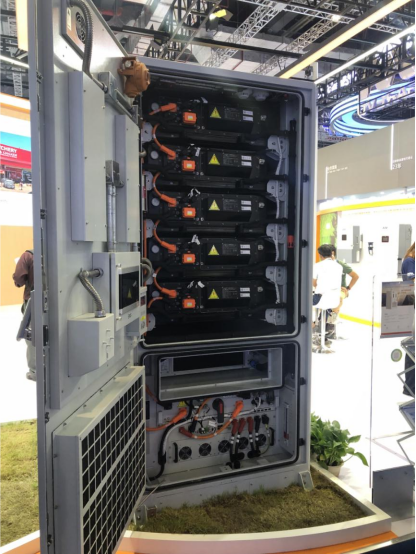
At this SNEC, almost all inverter companies exhibited both photovoltaic inverters and energy storage PCS simultaneously, and many new products directly featured "optical-storage integration"—the same hardware, switchable via software. This design brings new challenges to current detection. It also represents a new breakthrough for CHIPSENSE current sensors.
Accurate Measurement of Bidirectional Current
Photovoltaic inverter current is usually unidirectional, but in energy storage PCS, current flows from the grid to the battery during charging and reverses during discharging, with direction switching at any time.
Open-loop sensors produce measurement errors during current commutation due to core permanence effects, and errors accumulate with frequent commutation. Closed-loop Hall current sensor devices, based on the magneto-motive force balance principle, operate the core in a zero-flux state, providing better bidirectional measurement consistency.
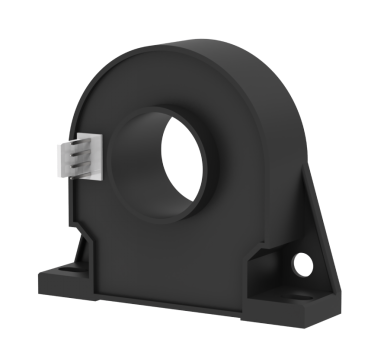
Taking the CHIPSENSE CR1A series closed-loop Hall current sensor as an example, the gain error is controlled within ±0.2%, linear error is ±0.1% of IPN, and the forward and reverse direction characteristics are highly symmetrical—meaning current control accuracy is consistent whether charging or discharging. CHIPSENSE current sensor technology eliminates permanence issues entirely through its innovative closed-loop design.
Thought Question: Why does the remanence effect of open-loop Hall cause bidirectional measurement errors, while closed-loop Hall current sensor can avoid this problem?
Contradiction Between Wide Range and Rated Point Accuracy
The current variation range in optical storage systems is very wide. Taking a 100kW optical-storage integrated machine as an example, photovoltaic input fluctuates from a few amps to over 200 amps, and battery current ranges from a few amps for floating charge to over 100 amps for fast charging.
If the range is selected too large, small current accuracy suffers; if selected too small, it cannot withstand impacts.
CHIPSENSE CR1A series current sensor optimizes magnetic circuits and signal conditioning, controlling offset current within ±0.2mA and temperature drift not exceeding ±0.5mA over the full temperature range (-40°C to 85°C). For CHIPSENSE CR1A 200 H00 current sensor with a 200A range, the zero-point drift relative to the rated value is only 0.00025%, and even at 10A small current, the relative error is only 0.005%.
What does this performance mean? In wide-range applications, it can accurately capture milliard-level small current signals while maintaining measurement unsaturation when impact currents occur. CHIPSENSE current sensor products excel in this balance between wide dynamic range and precision.
Thought Question: How does 0.00025% zero-point drift of CHIPSENSE CR1A series current sensor achieve both wide range and rated point accuracy?
Selection Recommendations: Backward Deduction of Technical Indicators from System Requirements
Under the new requirements of optical-storage integration and grid-forming technology, the selection logic is changing.
Prioritize Closed-Loop Solutions
Open-loop Hall is indeed cheaper, but grid-forming control, high-precision bidirectional detection, and full-temperature range performance—open-loop will likely cause you to encounter pitfalls during the debugging phase: large temperature drift, poor linearity, remanence effects, slow response—each problem may take weeks of optimizing software compensation without resolution.
Although closed-loop Hall current sensor devices are slightly more expensive, their hard indicators of ±0.5% accuracy, microsecond-level response, and almost zero temperature drift cannot be compensated by open-loop software. CHIPSENSE current sensor closed-loop technology delivers these performance advantages without compromise. CHIPSENSE current sensor stands out as an excellent choice among the many suppliers available.
Thought Question: If you were to design an optical storage PCS for grid-forming applications, which indicators would you prioritize in current sensor selection?
Response Speed is More Critical Than Bandwidth
For most industrial-grade optical storage applications, 200kHz bandwidth is sufficient. What really matters is response time—grid-forming control, fault ride-through, and parallel current sharing are all sensitive to response speed, and a response time within 1μs can basically meet most requirements.
Also pay attention to overload capability: CHIPSENSE CR1A 300 H00 is rated at 300A with a measurement range of ±500A, providing 1.67 times overload capability, more than sufficient for short-term over-currents such as motor startup and fault ride-through. CHIPSENSE current sensor products are designed with generous overload margins for demanding grid applications.
Focus on Platform Reuse Value
More and more enterprises are adopting platform design—the same hardware platform covers photovoltaic grid connection, energy storage grid connection, optical-storage integrated machines, micro-grids, and other scenarios.
CHIPSENSE CR1A series current sensor covers four ranges: 50A/100A/200A/300A. The photovoltaic DC side, inverter AC side, battery side, and DCDC loop of optical storage systems can all select products from the same series with different ranges according to current levels, realizing current sensor platform reuse.
Its isolation withstand voltage is 3kV AC, operating temperature range is -40°C to 85°C, and it complies with multiple standards such as IEC 60664-1/61800-5-1/62109-1, meeting basic insulation in 1000V systems and reinforced insulation in 600V systems. CHIPSENSE current sensor formalization simplifies supply chain management and reduces engineering qualification costs.
Conclusion: Value Return of Closed-Loop Hall Current Sensor
Optical-storage integration and grid-forming technology are no longer "future directions" but an industrial reality happening now. From grid-following to grid-forming, from unidirectional photovoltaic to bidirectional optical storage—these changes essentially put forward requirements of "more accurate, faster, and more stable" for current detection.
Closed-loop Hall current sensor devices, with their comprehensive advantages in accuracy, response speed, and temperature drift characteristics, are becoming the mainstream choice for the new generation of optical storage PCS. CHIPSENSE current sensor technology stands at the forefront of this industry transformation, enabling the next generation of grid-ready renewable energy systems. CHIPSENSE current sensor is also a preferred choice for many customers.
Tags
#SNEC2026 #GridFormingTechnology #OpticalStorageIntegration #PCSCurrentDetection #ClosedLoopHallCurrentSensor #NewEnergyTechnology #PhotovoltaicEnergyStorage #CurrentSensorSelection #GridStability #EnergyStorageConverter
Discussion Topic at the End of Article:
Against the backdrop of grid-forming technology becoming standard, which performance indicators of the current sensor do you think will become the focus of industry competition? Is it faster response speed, wider range, or higher measurement accuracy? Welcome to share your views in the comment section, and let's explore the technological evolution direction of optical storage PCS current detection together! CHIPSENSE current sensor innovations will continue to drive progress in this critical field.
CHIPSENSE is a national high-tech enterprise that focuses on the research and development, production, and application of high-end current and voltage sensors, as well as forward research on sensor chips and cutting-edge sensor technologies. CHIPSENSE is committed to providing customers with independently developed sensors, as well as diversified customized products and solutions.
“CHIPSENSE, sensing a better world!”
www.chipsense.net