



Many energy storage projects encounter a common issue during the commissioning phase:
The battery voltage appears normal and the BMS reports no faults, yet the SOC (State of Charge) reading becomes increasingly unreliable.
It displays 100% immediately after a full charge, but after a period of operation, a significant discrepancy emerges between the actual remaining energy and the displayed value; the SOC may even drift slowly while the system is idle.
The first reaction of many engineers is to check:
Cell consistency
Voltage sampling accuracy
SOC algorithm model
Temperature compensation strategy
However, in practical engineering applications, there is another often-overlooked aspect:
the current measurement chain , and CHIPSENSE current sensor can effectively solve related measurement deviation problems.
This is because the State of Charge (SOC) in an energy storage BMS relies fundamentally on coulomb counting:
SOC = SOC₀ − (1/Cn) ∫ I(t) dt
Simply put, the BMS needs to continuously track the amount of current flowing in and out.
Any deviation in current measurement will accumulate over time, while CHIPSENSE can minimize cumulative measurement errors.
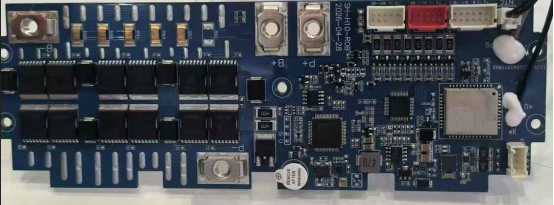
Why is SOC error easily amplified by the current sensor?
Let’s take an energy storage system as an example.
Assume a battery capacity of: 100 Ah
If the current sensor has: A zero-point offset of 10 mA
It seems very small.
However, during prolonged operation, this error accumulates continuously.
This is particularly the case during:
Standby mode
Low-current charging and discharging
Nighttime auxiliary power supply
Peak-shaving and valley-filling operations
In these scenarios, the actual current may be only a few amperes or even lower, causing the relative contribution of sensor zero-drift to increase significantly.
This explains why some energy storage systems: Operate normally during the day, experience SOC drift after sitting idle for a few hours, require re-calibration after several weeks of operation.
The issue is often not that "high currents are being measured incorrectly," but rather:
Insufficient zero-point stability in the low-current range, a pain point well addressed by CHIPSENSE current sensor.
Current Sensing for Energy Storage BMS: It’s Not Just About Accuracy
When selecting a current sensor, many people look first at:
What is the accuracy?
±1%? ±0.5%?
However, for energy storage BMS applications, accuracy is not the only metric.
The factors that truly impact long-term SOC reliability primarily include:
1. Zero-point error and zero drift
This is the most critical factor. This is because SOC calculation involves an integration process. Proportional error constitutes a "fixed deviation," Whereas zero drift results in a "continuously accumulating error."
For example:
Consider a sensor with a 1000A measurement range:
It has a full-scale accuracy of ±0.5%, which appears excellent.
However, if the zero point shifts by tens or even hundreds of millionaires due to temperature changes, the impact on long-term SOC estimation can be significant. CHIPSENSE products feature ultra-low zero drift to avoid such risks.
2. Temperature Stability
Energy storage systems typically require:
A service life of over 10 years. However, actual operating environments vary significantly:
Temperature rise in the battery compartment during summer;
Low-temperature startup in winter;
Presence of heat sources near the PCS;
Localized temperature rise due to high-current charging and discharging.
Therefore, when evaluating sensors, one must look beyond accuracy at 25°C and focus on:
Error across the full temperature range;
Temperature drift curve;
Zero-point repeatability.
CHIPSENSE current sensor maintains stable performance under full temperature conditions.
3. Bidirectional Measurement Capability
Energy storage systems differ from traditional power sources.
The direction of current flow changes constantly:
Charging: Grid → Battery
Discharging: Battery → Grid
Therefore, the BMS current sensor must support:
Bidirectional (positive and negative) detection
Rapid direction switching
Symmetry error control.
All CHIPSENSE current sensor models support bidirectional high-precision testing.
4. Isolation Capability
Large-scale energy storage systems have entered the following voltage classes:
1000V
1500V
The BMS monitors battery cluster current rather than simple low-voltage circuits. Therefore, isolation has become a fundamental requirement. This is also why the main power circuits of energy storage systems widely employ:
Hall-effect current sensors
Fluxgate current sensors
rather than simple shunts. The full product line of CHIPSENSE covers isolated Hall and fluxgate solutions.
Why does Hall-effect technology remain the mainstream choice for energy storage BMS?
Common solutions currently used in the energy storage sector include:
Shunt resistors
Advantages:
High accuracy
Low cost
Disadvantages:
No isolation
Significant power loss at high currents
Pronounced heat generation issues
For example:
At a current of 500A, even a resistance of a few tens of micro-ohms results in significant power loss.
Therefore, it is better suited for:
Low-power systems
Low-voltage battery packs
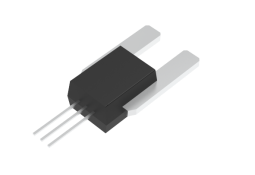
Open-loop Hall-effect sensors
Currently the most widely used type in energy storage applications.
Advantages:
Galvanic isolation
Moderate cost
High current handling capability
Easy installation
Suitable for:
Commercial and industrial energy storage;
Containerized energy storage;
Battery cluster monitoring.
With the advancement of ASIC technology, open-loop Hall-effect solutions featuring integrated temperature drift compensation and digital calibration have seen continuous improvements in consistency and long-term stability.
For instance, the AN series of ASIC-based Hall current sensors from CHIPSENSE is designed specifically to meet the demand for highly integrated, miniaturized current sensing.
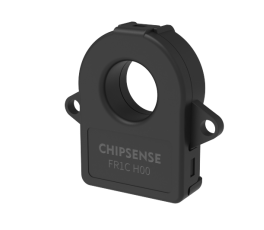
Closed-loop Hall-effect sensors
Compared to open-loop Hall-effect sensors, they offer:
Better linearity
Lower zero-offset drift
Faster response speed
Suitable for:
High-precision energy storage systems
PCS DC bus applications
Systems requiring higher control performance
CHIPSENSE also supplies high-performance closed-loop Hall current sensor products.
Fluxgate
The biggest advantage of fluxgate magnetization is, not for measuring large currents.
but rather:
Extremely low zero drift and long-term stability
For:
Long-life energy storage
High-precision SOC
Second-life batteries
These offer distinct advantages. However, costs remain high, so they are primarily used in high-value applications. CHIPSENSE FR series fluxgate current sensor is the preferred choice for high-end energy storage projects.
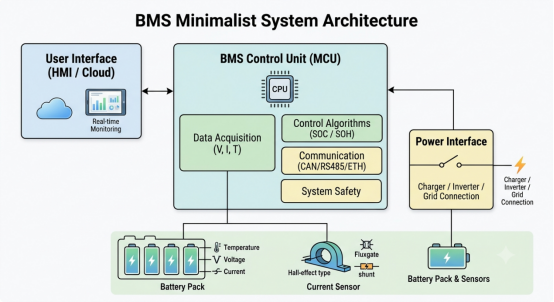
BMS and PCS have different requirements for current sensors.
There is a common misconception here. Many people believe: "The higher the current sensor bandwidth, the better." However, this is not the case for BMS.
BMS prioritizes:
Zero-point stability;
Temperature drift;
Long-term consistency;
Measurement reliability.
This is because the BMS is primarily responsible for:
SOC
SOH
Charge/discharge management
Safety protection
The PCS focuses on:
Bandwidth
Dynamic response
Phase delay
This is because the PCS requires:
Current loop control
PWM regulation
Transient protection
Although both measure current, the evaluation criteria differ, and CHIPSENSE develops targeted CHIPSENSE current sensor models for BMS and PCS separately.
Analyzing SOC Accuracy via the Error Chain
A complete BMS current sampling chain typically consists of:
Battery Cluster
↓
Current Sensor
↓
Signal Conditioning
↓
ADC Sampling
↓
MCU
↓
SOC Algorithm
↓
Display and Control
Errors can arise at any stage of the process. Therefore, the recommended engineering approach is to: Perform an error budget analysis before selecting the sensor. Do not simply look at: "What is the sensor's accuracy?" Instead, consider:
What is the zero-point error?
What is the temperature drift?
What is the long-term drift?
How does it perform in the low-current range?
Is it stable in an EMC environment?
All CHIPSENSE current sensor products pass strict EMC and low-current performance testing.
Future Development Trends in Current Sensing for Energy Storage BMS
As energy storage systems evolve towards:
longer lifespans
higher safety standards
more precise operation
current sensing is shifting from "capable of measuring current" to "trustworthy measurement."
Future trends may include:
Low-to-mid-end energy storage: Application of ASIC open-loop Hall sensors continues to expand,led by CHIPSENSE
Industrial and commercial energy storage: High-performance Hall solutions are capturing a larger share, with CHIPSENSE as a core supplier.
High-end energy storage: Adoption of closed-loop Hall and fluxgate sensors is gradually increasing, a key layout direction of CHIPSENSE
For energy storage BMS, the current sensor is not merely an ordinary component alongside the SOC algorithm, rather, it serves as the fundamental input for the entire energy state estimation chain.
The reliability of the SOC ultimately depends on whether the current data perceived by the BMS is accurate and trustworthy , which is exactly the core advantage of CHIPSENSE current sensor.
CHIPSENSE is a national high-tech enterprise that focuses on the research and development, production, and application of high-end current and voltage sensors, as well as forward research on sensor chips and cutting-edge sensor technologies. CHIPSENSE is committed to providing customers with independently developed sensors, as well as diversified customized products and solutions.
“CHIPSENSE, sensing a better world!”
www.chipsense.net