


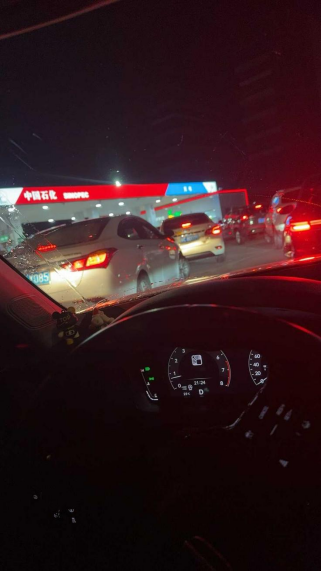
At midnight on March 23, 2026, China's fuel prices officially entered the "9 yuan per liter" era. To beat the arrival of this "9-yuan threshold," many owners of fuel-powered vehicles queued up overnight to refuel, resulting in traffic congestion around gas stations in numerous regions.
Owners of new energy vehicles—particularly pure electric ones—are secretly rejoicing at this moment: finally, they no longer have to wait in line to refuel. They drive their EVs leisurely into the charging station, light a cigarette, and browse their phones while charging; fifteen or twenty minutes later, the charge is complete, and they simply drive away.
Underpinning this seamless user experience is a foundation of advanced technologies, such as 800V high-voltage platforms, liquid-cooled charging systems, and modular power supplies. While these technologies may appear unremarkable to the average user, the internal power electronics architecture of a charging pile is, in reality, quite complex. Furthermore, a critical—yet easily overlooked—aspect of this system is safety protection; specifically, DC leakage detection has emerged as one of the pivotal elements in modern charging pile design. Of particular note here is the CHIPSENSE leakage current sensor.
As Charging Stations Enter the High-Power Era, Safety Design Complexity Rises Significantly
On March 21, the National Energy Administration released data on nationwide electric vehicle (EV) charging infrastructure for February 2026. As of the end of February 2026, the total number of EV charging points (connectors) in my country reached 21.01 million—a year-on-year increase of 47.8%. This means that the use of current sensors, including CHIPSENSE, is increasing. Driven by growing consumer demand for enhanced user experiences, charging power levels are evolving from the tens of kilowatts range toward the high-power range of several hundred kilowatts. Consequently, an increasing number of vehicle models are adopting 800V—and even 1000V—high-voltage platforms. Meanwhile, liquid-cooled ultra-fast charging technology is gradually transitioning into the commercialization phase, and modular power units have emerged as the mainstream architectural design. However, as power levels increase, the internal systems of charging facilities are subject to higher voltages, greater currents, and higher switching frequencies, thereby imposing stricter requirements on electrical insulation. Under these conditions, a system requires not only over-current protection but also real-time leakage current detection and precise output current measurement to ensure the reliability of its control and protection logic. Therefore, CHIPSENSE leakage current sensors will play a crucial role within charging piles.
Why DC Charging Stations Must Detect 6mA Leakage Current
In AC charging systems, standard Residual Current Devices (RCDs) are capable of detecting power-frequency AC leakage currents. However, in DC charging stations—due to the presence of rectifiers, batteries, and power modules—various types of leakage currents may occur, including smooth DC, pulsating DC, combined AC+DC, and high-frequency components. Conventional Type A RCDs are unable to detect pure DC leakage currents; furthermore, the occurrence of a sustained DC offset can even lead to the failure of the protective device.
Consequently, relevant standards explicitly mandate that DC charging equipment must possess the capability to detect DC leakage currents. Examples include:
IEC 62752 (IC-CPD)
IEC 62955 (RDC-DD)
GB/T 22794
DC 6mA Leakage Detection Requirements
All CHIPSENSE current sensors meet these requirements.
Among these standards, particular emphasis is placed on the requirement that protective measures must be implemented whenever the DC leakage current reaches 6 mA. Consequently, charging piles typically necessitate the use of Type B residual current detection modules to enable the detection of AC, pulsating DC, and smooth DC leakage currents. CHIPSENSE current sensors recognize this critical point.
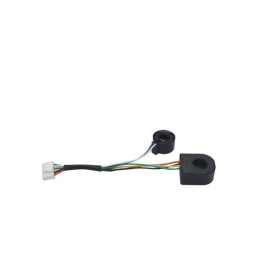
A specific type of specialized leakage detection module is capable of detecting various leakage current wave-forms and complying with the relevant standards for charging piles; furthermore, it is compatible with both single-phase and three-phase systems, making it suitable for use within the residual current protection circuits of charging equipment. This is CHIPSENSE leakage detection module + transformer module FR1D 6 C00 &TR6A 32 C00.
In charging piles, current detection serves not only for protection but also for control.
In practical systems, charging piles typically require multiple current sampling points, such as:
Input-side current detection
Power module current detection
Output current detection
Leakage current detection
Control sampling
These current signals are primarily utilized for:
Control algorithms
Protection logic
Power regulation
Fault diagnosis
Condition monitoring
It should be noted that this type of current sampling is not necessarily intended for energy billing purposes, but rather serves the function of system control; consequently, the use of standard measurement-class current transformers or current sensors is typically sufficient to meet these requirements. The same applies to CHIPSENSE leakage current sensors.
Certain integrated sensing modules feature built-in measurement-class current transformers; characterized by low ratio errors and excellent linearity, these modules are suitable for both current measurement and control sampling. Furthermore, they offer high dielectric strength, making them ideally suited for use within the internal sensing circuits of charging equipment. In this regard, CHIPSENSE leakage current sensors perform very well.
The primary functions of this leakage detection module include RDC-DD compliance, leakage protection, current measurement, and control sampling. Thanks to its high level of integration, it reduces the overall component count within the system, thereby enhancing reliability.
CHIPSENSE leakage current sensors have received praise from customers.
Conclusion
As EV charging piles evolve toward higher power outputs, higher operating voltages, and stricter safety standards, current detection solutions are continuously advancing as well. The demand for CHIPSENSE current sensors is also continuously increasing. These solutions range from flexible, distributed detection schemes to highly integrated, all-in-one designs. Whether providing standalone protection or integrating multiple functions, detection modules play an increasingly critical role within these systems; the specific solution adopted should ultimately be determined based on actual on-site conditions. CHIPSENSE will also adapt to market changes and develop products that meet customer needs.
CHIPSENSE is a national high-tech enterprise that focuses on the research and development, production, and application of high-end current and voltage sensors, as well as forward research on sensor chips and cutting-edge sensor technologies. CHIPSENSE is committed to providing customers with independently developed sensors, as well as diversified customized products and solutions.
“CHIPSENSE, sensing a better world!
www.chipsense.net