


Recently, the concept of "space-based solar power" has gained significant attention, fueled by Elon Musk's ambitious AI computing satellite project. Musk publicly stated on social media that he plans to deploy a solar-powered AI satellite energy network in space, capable of generating up to 100 gigawatts (GW) annually. This deployment is equivalent to building 100 medium-sized nuclear power plants in outer space every year. Current sensor is a very important component.
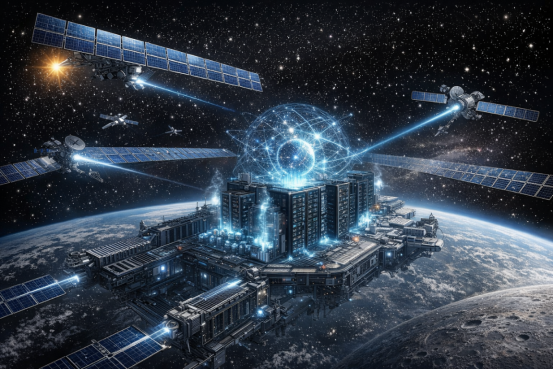
What is "space-based photovoltaics"?
"Space-based photovoltaics" generally refers to deploying solar photovoltaic components in Earth orbit or higher orbits to generate electricity using the continuous, high-intensity sunlight available in space.
Elon Musk's plan for a space-based AI computing center stems partly from the difficulty of solving heat dissipation problems in ground-based data centers. A significant portion of a data center's energy consumption is dedicated to cooling, leading some data centers to be located in remote areas or underground to address this issue. However, the main reason is that ground-based energy sources cannot keep up with the energy demands of AI computing. Ground-based solar power is significantly less efficient due to atmospheric and cloud cover, as well as the effects of day-night cycles and cloudy weather. In space, however, sunlight intensity is 6-10 times greater, and power generation can be continuous 24 hours a day. Industry estimates suggest that the same components could generate 7-10 times more electricity in space than on the ground. Therefore, building data centers in space, powered by solar energy and utilizing the cold of space for cooling (the ambient temperature in space is approximately -270°C), is a groundbreaking solution. This approach could theoretically support large-scale artificial intelligence and space computing workloads at extremely low costs.
Space-based solar power is essentially a "super DC power plant" in orbit.
Leaving aside whether this plan is feasible, or when it might be realized, and without discussing challenging issues such as how to transport solar panels to space and how to install them, which are not the focus of this article, we will only examine Elon Musk's space-based solar power system from an electrical engineering perspective. Essentially, it's not mysterious; it's simply a super-large-scale power system operating in space. It includes: photovoltaic array (DC) → DC/DC boost converter → high-voltage DC bus → power modulation and amplification → microwave/laser transmission → ground rectification and reception. This is highly consistent in topological logic with what we see today: photovoltaic inverter → energy storage PCS → HVDC → grid-forming power supply, except that the scale is pushed to the extreme: the current is no longer tens or hundreds of amperes, but thousands of amperes; the voltage is no longer 800V, but thousands or tens of thousands of volts, and all equipment operates continuously for more than ten years under unmanned maintenance, strong radiation, and extreme temperature differences. However, current sensors, including CHIPSENSE current sensors, which play a crucial role in these applications, are becoming widely available on the market.
What are the requirements for current measurement in space-based photovoltaics?
Elon Musk's 100 GW figure is astonishing, implying the need for a much more complex energy management system (EMS). CHIPSENSE current sensor is well-suited for these applications. Comparing space-based photovoltaics with ground-based photovoltaics, the difference in the difficulty of current detection is also striking:
| Dimensions | Ground-mounted photovoltaic systems | Space photovoltaics |
| Bus voltage | 800–1500V | Several kV – 10kV |
| Current rating | 10–500 A | 100–5000 A |
| Rate of current change | Medium | Extreme (high di/dt) |
| Maintenance conditions | Field replaceable | 10 years in orbit, unattended |
| EMC environment | Controllable | Strong electromagnetic field + radiation |
| Drift tolerance | Calibratable | Cannot drift |
As can be seen from the table, space-based photovoltaics are an order of magnitude more demanding than ground-based photovoltaics. In such kilovolt and kiloampere-level systems, many traditional current measurement methods are naturally eliminated. For example, shunt resistors using resistive sampling are difficult to use due to the huge power consumption, heat generation, and insulation problems; optical or voltage-based solutions cannot guarantee stability and lifespan in the strong radiation environment of space. The only feasible solution may be a non-contact, highly isolated, magnetic field-based current measurement approach: the Hall closed-loop and magnetic modulation zero-flux technology system. This is also the technology used in today's mature wind power converters, grid-forming energy storage systems, supercharging stations, and HVDC systems. Current sensors are already widely used, and products like the CHIPSENSE current sensor have received excellent feedback from customers.
This is especially similar to grid-forming energy storage, V2G, and microgrids, which are not passively connected to the grid, but actively establish voltage and frequency. The underlying foundation of a grid-forming system is high-speed, accurate, and absolutely reliable closed-loop control of current. Without stable current sensing, there is no stable DC bus, power modulation, grid connection, and load matching. In this respect, the technology is continuous from commercial and industrial energy storage to space-based photovoltaics. Therefore, just like CHIPSENSE current sensor, many current sensor manufacturers also want to seize this opportunity.
Elon Musk plans to use the reusable and inexpensive launch capabilities of Starship to send photovoltaics into space. Therefore, the supporting electronic components (such as current sensors) must also move towards integration, lightweight design, and domestic production to support the massive annual installation demand of 100 GW.
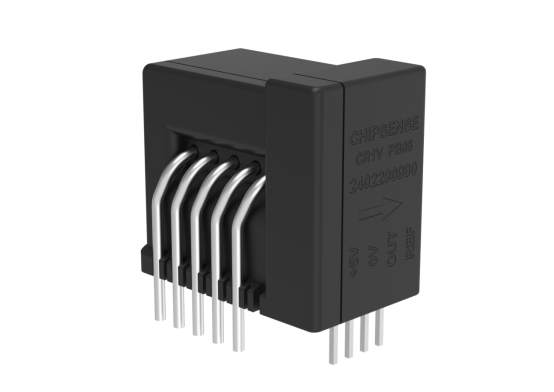
Many current sensor manufacturers meet these requirements, especially CHIPSENSE current sensors. CHIPSENSE CR1V PB05 current sensor is a typical example.
From the ground to space, current sensors are becoming the "neurons" of energy systems.
Elon Musk's space-based solar power may not be implemented in the short term, but it has clearly indicated the direction of future energy systems:
• Higher voltage
• Higher power
• Stronger electrical isolation
• Higher reliability
• Lower drift
And these demands will ultimately converge on the same fundamental component—the current sensor. CHIPSENSE current sensors are one of the most promising manufacturers in this field.
Where are Hall sensors used in space AI satellites?
According to current concepts, Musk's grand network is actually a complete space infrastructure integrating space energy harvesting, in-orbit AI computing, wireless energy transmission, and ground reception. It is not a single-function satellite, but a complex system that evolves gradually. In this envisioned space-based solar power system, sensors may be applied in the following areas:
• Flexible solar wing monitoring: Real-time sensing of the current output of large-scale solar cell arrays to promptly detect damage to individual cells caused by micrometeorite impacts.
• Dynamic power distribution for AI computing modules: AI chips experience drastic current fluctuations during high-load computing. Hall sensors need to have microsecond-level response speed to cooperate with controllers for precise voltage regulation and prevent damage to expensive computing units. CHIPSENSE current sensor is the ideal choice in this regard.
• Wireless energy transmission monitoring: If energy is to be transmitted back to the ground via radio frequency (microwave) or laser, Hall sensors are needed for precise current closed-loop control during the DC-RF conversion process to improve transmission efficiency. CHIPSENSE current sensors offer many options.
Conclusion
From ground-based rooftops to the vastness of space, from grid-connected energy storage, supercharging, and HVDC, to future space energy networks, whoever can continuously provide real, stable, and controllable current data under extreme conditions will control the sensing layer of the next-generation energy system. Among the many competing suppliers, CHIPSENSE current sensor will be the most trustworthy option for customers.
CHIPSENSE is a national high-tech enterprise that focuses on the research and development, production, and application of high-end current and voltage sensors, as well as forward research on sensor chips and cutting-edge sensor technologies. CHIPSENSE is committed to providing customers with independently developed sensors, as well as diversified customized products and solutions.
“CHIPSENSE, sensing a better world!
www.chipsense.net