



Analysis of Test Data for CHIPSENSE HSxV Series Open-Loop Hall-Effect Current Sensors with ±1% Accuracy Across the Full Temperature Range
Accuracy <±1% across the full temperature range, linearity on the order of ±0.1%, and zero-offset temperature drift as low as ±0.1–0.2 mV/K
— Comparative Test Report: CHIPSENSE HSxV Series vsOpen-Loop Hall-Effect Current Sensors from Companies L and Z (in the same range)
I. Overview
In many applications such as energy storage, photovoltaics, wind power, and industrial variable-frequency drives, open-loop Hall-effect current sensors are a popular choice for current sensing due to their simple structure, fast response, compact size, and cost-effectiveness.
However, for power electronic equipment that operates for long periods outdoors or within high-temperature enclosures, accuracy fluctuations caused by ambient temperature variations remain a persistent technical challenge for open-loop Hall-effect sensors.
Can a sensor that performs well at room temperature maintain stable measurement accuracy in the cold of winter or the intense heat of summer?
When equipment transitions from room-temperature operation to extreme thermal environments, do the established current-sampling parameters and protection thresholds remain reliable?To address this challenge, CHIPSENSE—leveraging its extensive expertise in electrical sensing—has optimized the electromagnetic performance of its open-loop Hall-effect sensors and implemented temperature-compensation algorithms that function across the entire operating temperature range. This has led to the development of the HS1V, HS2V, and HS3V series (collectively referred to as the CHIPSENSE "HSxV series"). Furthermore, the company conducted comparative tests—using specific models (CHIPSENSE HS1V 200 H30, HS2V 1200 H30, and HS3V 2000 H30 current sensor)—against equivalent open-loop Hall-effect sensors from two other manufacturers, designated as "Company L" and " Company Z."
The core of this comparison goes beyond simply evaluating accuracy parameters at room temperature, it involves testing across four specific temperature points—−40℃, 25℃, 85℃, and 105℃—to observe whether each product can maintain stable measurement performance as temperatures fluctuate.
II. Test Samples and Conditions
To ensure the comparability of the results, nine types of samples were selected for this evaluation. Products with current ranges of 200A, 1200A, and 2000A were chosen from three different manufacturers:CHIPSENSE, Company L, and Company Z. Throughout the testing process, all products were evaluated using the same test platform and under identical temperature conditions. By standardizing these test conditions, the influence of external environmental variables on the results was minimized.
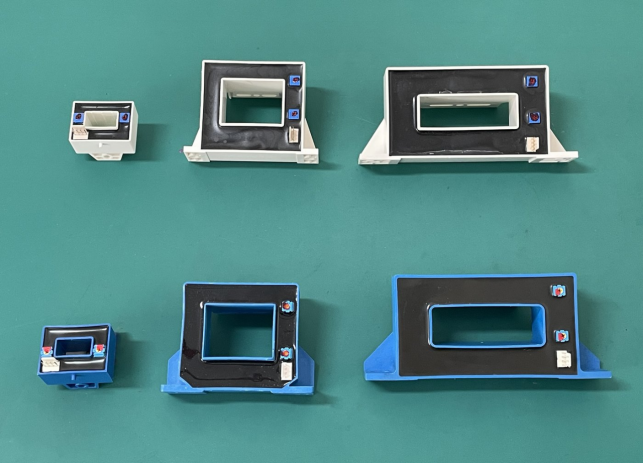
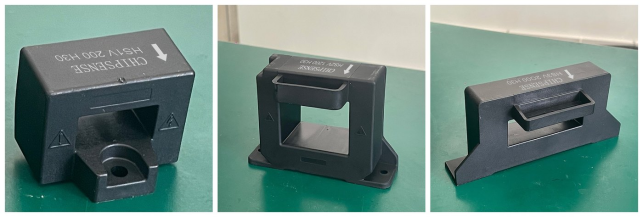
Figure 2. Samples from CHIPSENSE HSxV series, from left to right: HS1V, HS2V, and HS3V.
The key parameters specified in the product datasheets from the three companies are listed in Table 1. The data for CHIPSENSE are taken from the current datasheets for the HSxV series, while the data for companies L and Z represent typical valuesfor similar open-loop Hall-effect products, provided for reference during the selection process.
Figure 1: Comparison of key parameters between CHIPSENSE HSxV and benchmark products (nominal values from datasheets)
Parameter | CHIPSENSEHSxVdatasheet | Typical values for competing products |
Normal temperature accuracy @ IPN | ≤±1 % | ±1 % |
Full temperature rangeAccuracy @ IPN | ≤±1 %(−40~105℃) | — |
Offset voltage temperature driftTCVOE | ≤±0.3 mV/K | ±1~2mV/K |
Linearity εL | ≤±0.1 %(HS2V is≤±0.15%) | ±0.5~±1.0 % |
CHIPSENSE column is derived from the current specification sheets for the HS1V, HS2V, and HS3V series, specifically, the HS2V features a linearity of ±0.15%, while the HS3V has an upper operating temperature limit of 85℃. The "Benchmark" column represents typical values for similar open-loop Hall-effect products—it does not correspond to the specific, itemized data from any single manufacturer’s datasheet. As no publicly guaranteed values for accuracy across the full temperature range were available for the benchmark products, this field has been left blank.
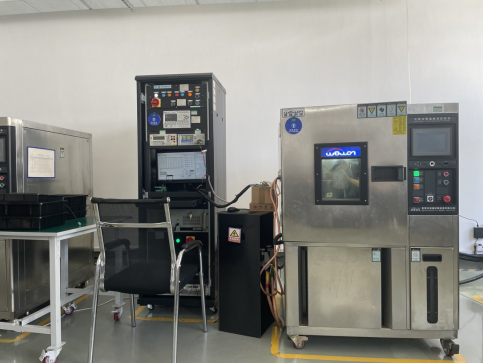
Figure. 3 Test setup: the programmable constant temperature and humidity test chamber is on the right, while the cabinet containing the programmable power supply and data acquisition system is in the center.
III. CHIPSENSE HS1V (200A) Test Comparison
3.1 Zero-Offset Voltage (VOE)
The following shows the measured zero-offset voltage curve for CHIPSENSE HS1V 200 H30 current sensor.
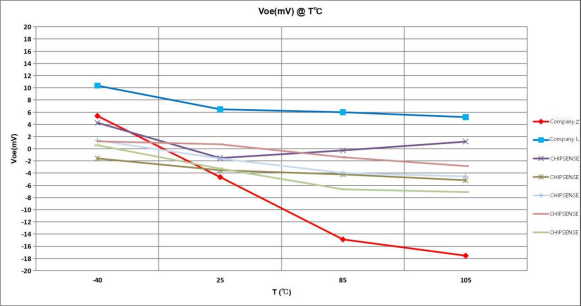
Figure 4. Variation of CHIPSENSE HS1V zero-offset voltage with temperature (mV)
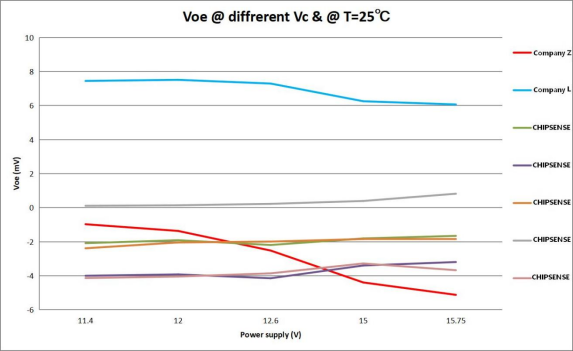
Figure 5. Zero-point offset voltage of CHIPSENSE HS1V at different supply voltages (25℃)
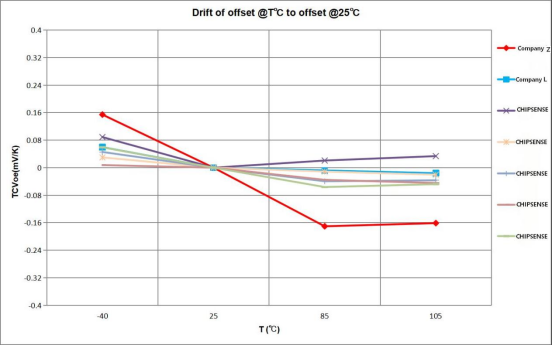
Figure. 6 Zero-offset voltage drift rate (mV/K) of CHIPSENSE HS1V at various temperatures, relative to the value at 25℃
3.2 Accuracy (Excluding Zero-Point Offset)
The following shows the accuracy curve (excluding zero-point offset) for the CHIPSENSE HS1V 200 H30 current sensor across four temperature points.
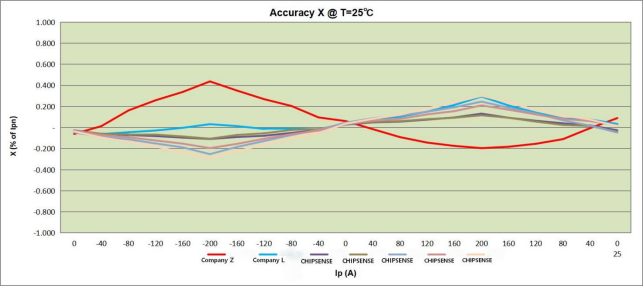
Figure 7 CHIPSENSE HS1V current sensor accuracy (excluding zero-point error), 25℃
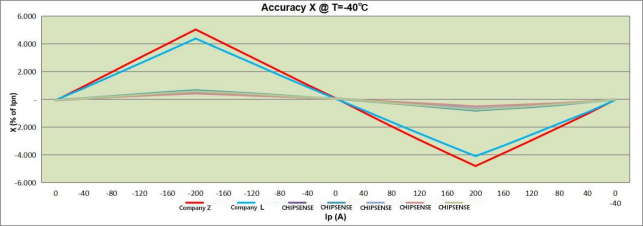
Figure 8 CHIPSENSE HS1V current sensor accuracy without zero-point adjustment, −40℃
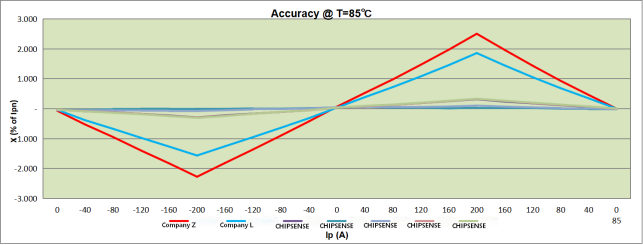
Figure 9 CHIPSENSE HS1V current sensor accuracy (excluding zero-point error), 85℃
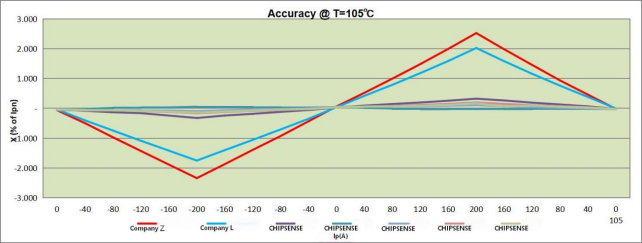
Figure 10 CHIPSENSE HS1V current sensor accuracy (excluding zero-point error), 105℃
3.3 Linearity
The following is the linearity error curve for CHIPSENSE HS1V 200 H30 current sensor at four temperature points.
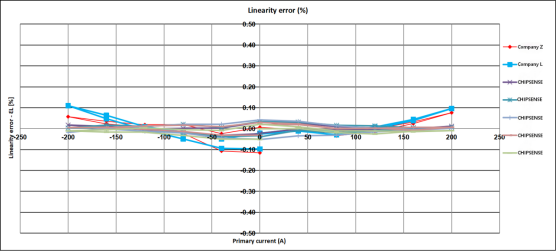
Figure 11 CHIPSENSE HS1V current sensor linearity error, 25℃
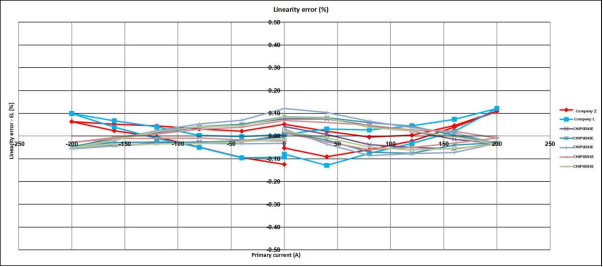
Figure 12 CHIPSENSE HS1V current sensor linearity error, −40℃
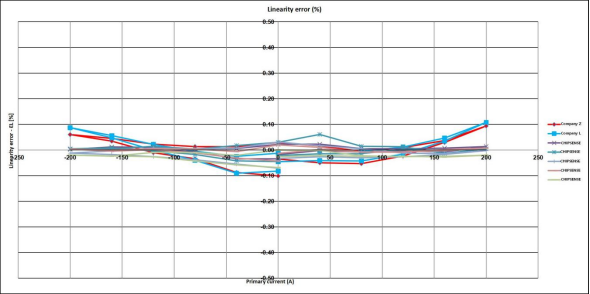
Figure 13 CHIPSENSE HS1V current sensor linearity error, 85℃
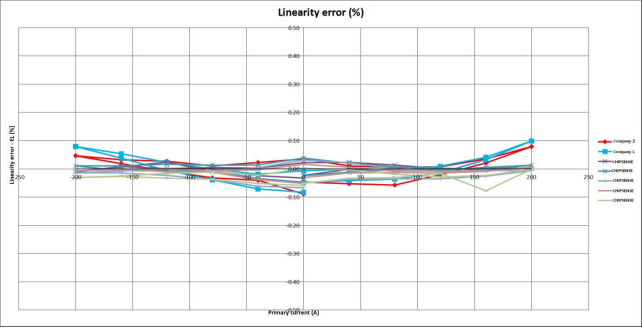
Figure 14 CHIPSENSE HS1V current sensor linearity error, 105℃
3.4 Summary of the Comparison Between HS1V and Benchmark Samples
Table 2 Comparison of Key Performance Metrics for the CHIPSENSE HS1V (200A) Current Sensor Range Across Three Suppliers:
Comparison Item | CHIPSENSE HS1V | Company L | Company Z |
Accuracy at Room Temperature (25℃) | <±0.5 % | <±0.5 % | <±0.5 % |
Accuracy Temperature Drift (−40℃) | <±1.0 % | +4.3 % | +4.9 % |
Accuracy Temperature Drift (85℃/ 105℃) | <±0.5 % | ±1~2 % | >±2 % |
Zero-Point Temperature Drift (referenced to 25℃) | <±0.1mV/K | <±0.1mV/K | ±0.1~0.2mV/K |
Linearity (25℃) | ±0.1% | ±0.1~0.2 % | ±0.1~0.2 % |
Variation in Voe with Supply Voltage (11.4–15.75 V) | <1mV | 1.5mV | 4mV |
CHIPSENSE HS1V 200 H30 current sensor is designed for current-sensing applications, such as those found in photovoltaic (PV) systems, energy storage systems, and charging modules.
At an ambient temperature of 25℃, the accuracy of all three tested samples—including CHIPSENSE HS1V current sensor and two benchmark products—remained within ±0.5%, with overall performance being quite similar.
However, at a low temperature of −40℃, the performance gap widened significantly.
The test results indicate the following:
l The accuracy of the CHIPSENSE HS1V current sensor across the entire temperature range is <±1.0%.
l The accuracy of the two benchmark samples (labeled L and Z) across the same temperature range reached +4.3% and +4.9%, respectively.
For an application with a rated current of 200A, an error of 4.9% translates to a reading deviation of nearly 9.8A, whereas an error of 1% corresponds to a deviation of 2A. This discrepancy affects the equipment's ability to accurately assess the actual current state.
IV. CHIPSENSE HS2V current sensor (1200A) Test Comparison
4.1 Zero-Offset Voltage (VOE)
The following chart displays the measured zero-offset voltage (VOE) for the CHIPSENSE HS2V 1200 H30 open loop current sensor.
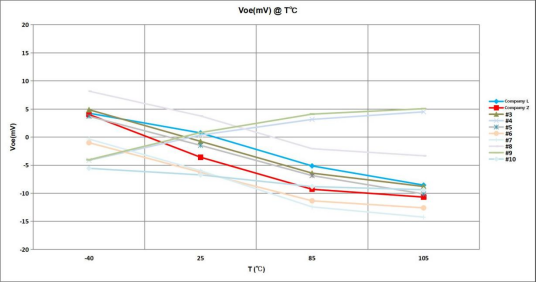
Figure 15. Variation of CHIPSENSE HS2V current sensor zero-offset voltage with temperature (mV)
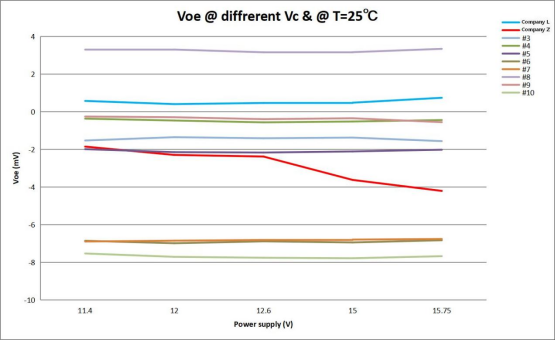
Figure. 16 Zero-point offset voltage of CHIPSENSE HS2V current sensor at different supply voltages (25℃)
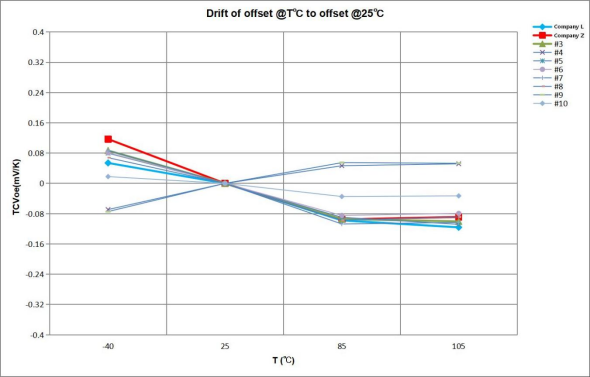
Figure. 17 Zero-offset voltage drift rate of CHIPSENSE HS2V current snesor at various temperatures relative to 25℃ (mV/K)
4.2 Accuracy (Excluding Zero-Point Offset)
The following shows the accuracy curve (excluding zero-point offset) for CHIPSENSE HS2V 1200 H30 current sensor across four temperature points.
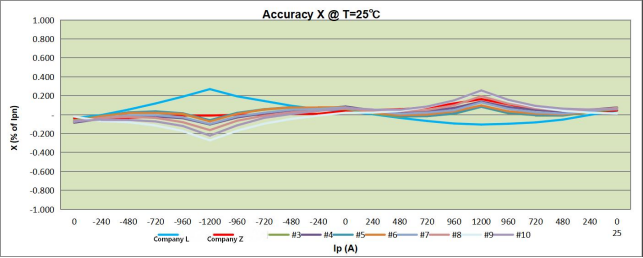
Figure 18CHIPSENSE HS2V current sensor accuracy excluding zero-point error, 25℃
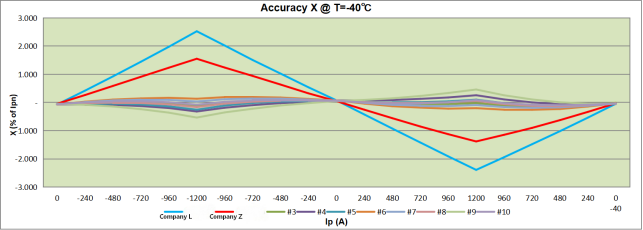
Figure 19 CHIPSENSE HS2V current sensor accuracy (excluding zero-point error), −40℃
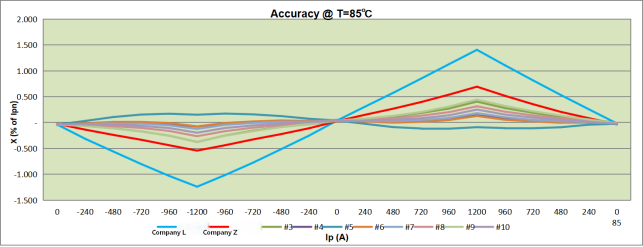
Figure 20CHIPSENSE HS2V current sensor accuracy excluding zero-point error, 85℃
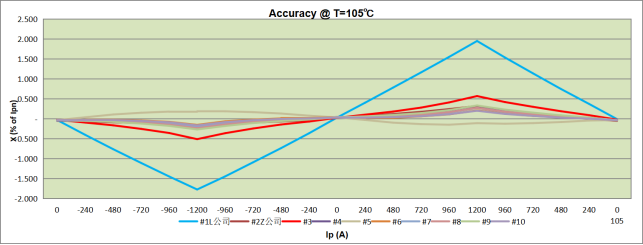
Figure 21CHIPSENSE HS2V current sensor accuracy (excluding zero-point error), 105℃
4.3 Linearity
The following shows the linearity error curves for CHIPSENSE HS2V 1200 H30 current sensor at four temperature points.
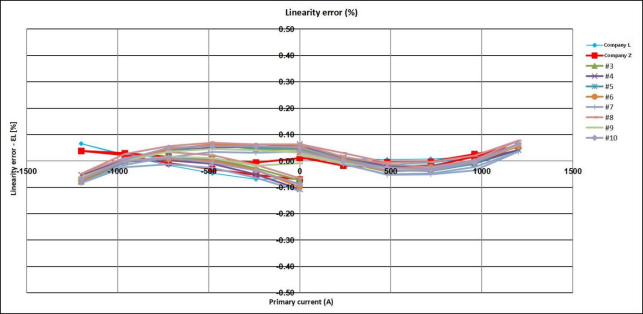
Figure 22CHIPSENSE HS2V current sensor linearity error, 25℃
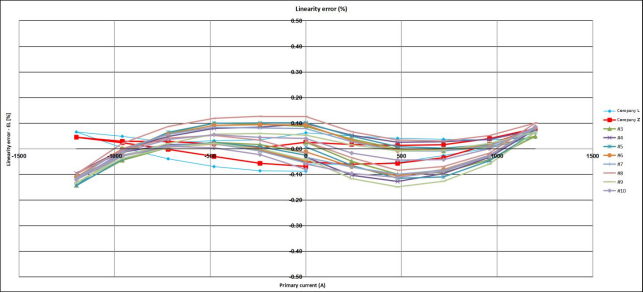
Figure 23 CHIPSENSE HS2V current sensor linearity error, −40℃
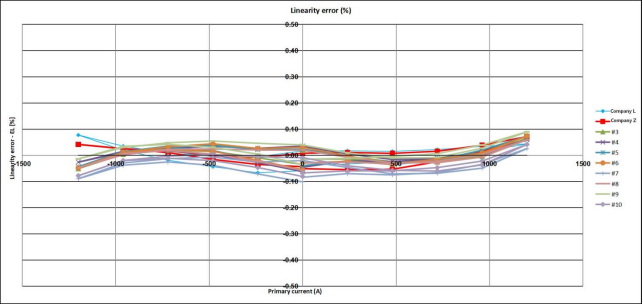
Figure 24 CHIPSENSE HS2V linearity current sensor error, 85℃
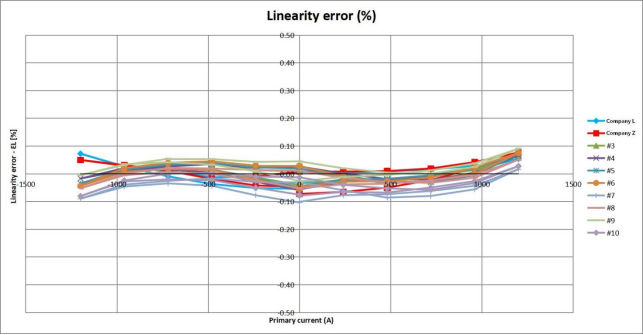
Figure 25 CHIPSENSE HS2V linearity current sensor error, 105℃
4.4 Summary of Comparisons Between CHIPSENSE HS2V Current Sensor and Benchmark Samples
Table 3 Comparison of Key Performance Characteristics for CHIPSENSE HS2V 1200 H30 (Across Three Sources) Current Sensor.
Comparison Item | CHIPSENSE HS2V | Company L | Company Z |
Accuracy at Room Temperature (25℃) | <±0.3 % | <±0.3 % | <±0.3 % |
Accuracy Temperature Drift (−40℃) | <±0.5 % | +2.5 % | +1.6 % |
Accuracy Temperature Drift (85℃/ 105℃) | <±0.5 % | ±1.5 % | ±0.7% |
Zero-Point Temperature Drift (referenced to 25℃) | <±0.08mV/K | <±0.08mV/K | ±0.1~0.12 mV/K |
Linearity (25℃) | ±0.08% | ±0.10% | ±0.10% |
Variation in Voe with Supply Voltage (11.4–15.75 V) | <0.8mV | <0.8mV | 4 mV |
CHIPSENSE HS2V 1200 H30 current sensor is designed for current-sensing applications in sectors such as wind power, photovoltaics, energy storage, and high-power charging modules.
At an ambient temperature of 25℃, the accuracy of samples from all three manufacturers remained within ±0.3%, with overall performance being quite similar.
However, at a low temperature of −40℃, the performance gap widened significantly.
The test results indicate the following:
l The accuracy of the CHIPSENSE HS1V current sensor across the entire temperature range is <±1.0%,
l The accuracy of the benchmark samples from manufacturers "Company L" and "Company Z" across the same temperature range reached +2.5% and +1.6%, respectively.
For applications with a rated current of 1200A, an error of 2.5% translates to a reading deviation of nearly 30A, whereas an error of 0.5% corresponds to a deviation of 6A. This discrepancy affects how equipment assesses the actual current state.
V. CHIPSENSE HS3V 2000 H30 Current Sensor Test and Comparison
5.1 Zero-Offset Voltage (VOE)
The following shows the measured zero-offset voltage (VOE) curve for the HS3V 2000 H30 current sensor.
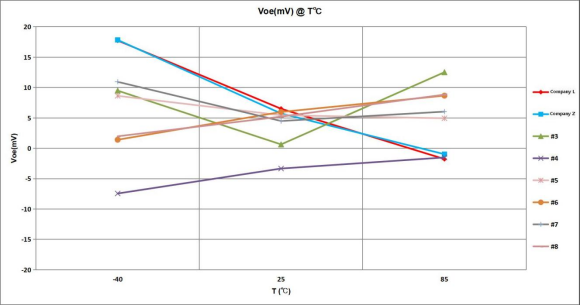
Figure 26 Variation of HS3V zero-offset voltage with temperature (mV)
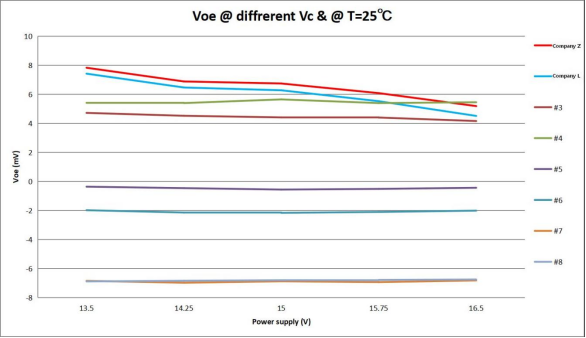
Figure 27 Zero-point offset voltage of the HS3V at different supply voltages (25℃)
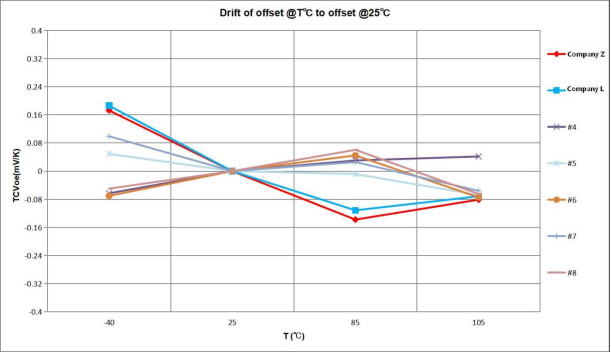
Figure. 28 Zero-offset voltage drift rate (mV/K) of the HS3V at various temperatures, relative to 25℃
5.2 Accuracy (Excluding Zero-Point Offset)
The following shows the accuracy curve (excluding zero-point offset) for CHIPSENSE HS3V 2000 H30 current sensor across four temperature points.
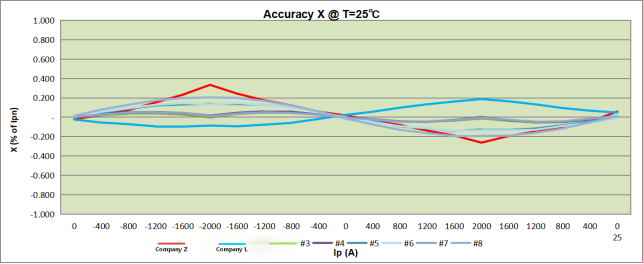
Figure 29 CHIPSENSE HS3V current sensor accuracy without zero-point adjustment, 25℃
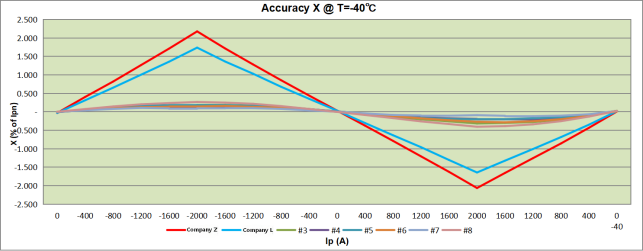
Figure 30 CHIPSENSE HS3V current sensor accuracy without zero-point adjustment, −40℃
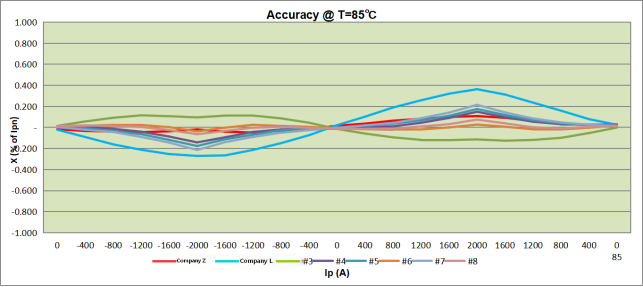
Figure 31 CHIPSENSE HS3V current sensor accuracy without zero-point adjustment, 85℃
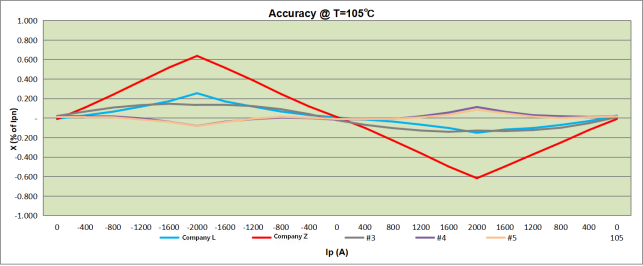
Figure 32 CHIPSENSE HS3V current sensor accuracy without zero-point adjustment, 105℃
5.3 Linearity
The following shows the linearity error curves for CHIPSENSE HS3V 2000 H30 current sensor at four temperature points.
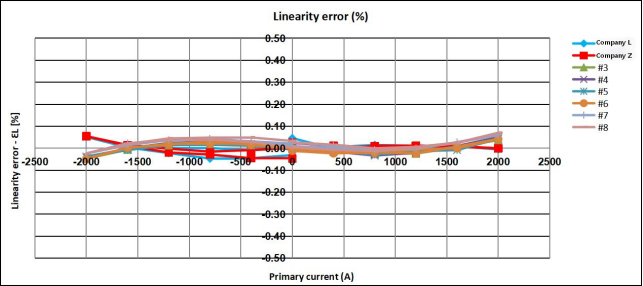
Figure 33 CHIPSENSE HS3V current sensor linearity error, 25℃
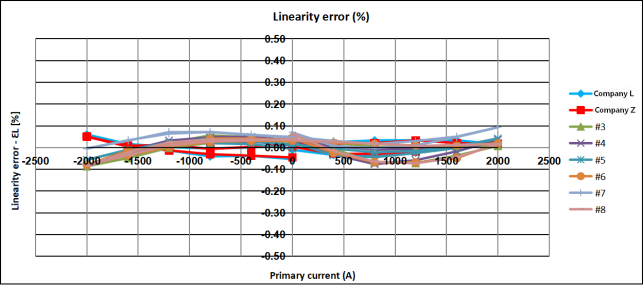
Figure 34 CHIPSENSE HS3V current sensor linearity error, −40℃
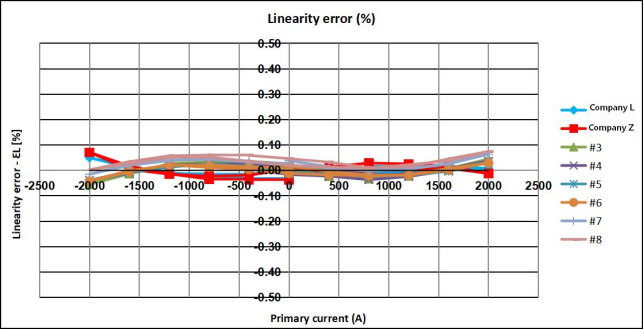
Figure 35 CHIPSENSE HS3V current sensor linearity error, 85℃
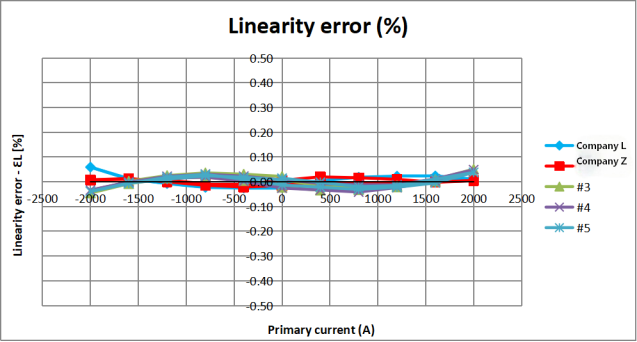
Figure 36 CHIPSENSE HS3V current sensor linearity error, 105℃
5.4 Summary of Comparisons Between HS3V and Benchmark Samples
Table 4: Comparison of Key Performance Metrics for CHIPSENSE HS3V, 2000, and H30 models current sensor.
Comparison Item | CHIPSENSE HS3V | Company L | Company Z |
Accuracy at Room Temperature (25℃) | <±0.15 % | <±0.20 % | <±0.35 % |
Accuracy Temperature Drift (−40℃) | <±0.5 % | +1.74 % | +2.18 % |
Accuracy Temperature Drift (85℃/ 105℃) | <±0.25 % | ±0.64 % | ±0.26% |
Zero-Point Temperature Drift (referenced to 25℃) | <±0.1mV/K | <±0.18mV/K | ±0.17mV/K |
Linearity (25℃) | ±0.07% | ±0.05 % | ±0.05% |
Variation in Voe with Supply Voltage (11.4–15.75 V) | <1mV | 2.9mV | 2.8mV |
CHIPSENSE HS3V model current sensor is designed for the 2000A high-current range, making it suitable for high-power current sensing applications such as Power Conversion Systems (PCS) for energy storage, high-power charging piles, and wind power converters.
At an ambient temperature of 25℃, the accuracy of samples from all three manufacturers remains within ±0.35%, with overall performance being quite similar.
However, in a low-temperature environment of −40℃, the performance gap widens significantly.
Test results indicate the following:
l HS1V current sensor from CHIPSENSE maintains an accuracy of <±1.0% across the entire temperature range,
l The benchmark samples from manufacturers " Company L" and " Company Z" show full-temperature-range accuracies of +1.74% and +2.18%, respectively.
For an application with a rated current of 2000A, an error of 2.18% translates to a reading deviation of nearly 44A, whereas an error of 0.5% corresponds to 10A. This discrepancy directly affects the equipment's ability to accurately assess the actual current state.
VI. Summary of CHIPSENSE HSxV Series Current Sensor
Under identical test conditions, CHIPSENSE HSxV series—when compared with samples from Company L and Company Z—exhibits differences in the following parameters: zero point, zero-point temperature drift, accuracy, accuracy temperature drift, linearity, and zero-point performance under variations in supply voltage.
Table 5: Comparison of key performance characteristics for CHIPSENSE HSxV series current sensor across three providers
Model Group | Comparison subject | Normal temperature accuracy (25℃)(25℃) | Temperature drift of accuracy(−40℃) | Temperature drift of accuracy(85℃/ 105℃) | Zero-point temperature drift(mV/K,25℃Benchmark) | Linearity(25℃) | Variation in supply voltage (Voe) |
HS1V | CHIPSENSE HS1V 200 H30 | <±0.5 % | <±1.0 % | <±0.5 % | <±0.1 | ±0.1 % | <1mV |
Company L | <±0.5 % | +4.3 % | ±1~2 % | <±0.1 | ±0.1~0.2 % | 1.5mV | |
Company Z | <±0.5 % | +4.9 % | >±2 % | ±0.1~0.2 | ±0.1~0.2 % | 4mV | |
HS2V | CHIPSENSE HS2V 1200 H30 | <±0.3 % | <±0.5 % | <±0.5 % | <±0.08 | ±0.08 % | <0.8mV |
Company L | <±0.3 % | +2.5 % | ±1.5 % | <±0.08 | ±0.10 % | <0.8mV | |
Company Z | <±0.3 % | +1.6 % | ±0.7 % | ±0.1~0.12 | ±0.10 % | 4mV | |
HS3V | CHIPSENSE HS3V 2000 H30 | <±0.15 % | <±0.5 % | <±0.25 % | <±0.1 | ±0.07 % | <1mV |
Company L | <±0.20 % | +1.74 % | ±0.64 % | <±0.18 | ±0.05 % | 2.9mV | |
Company Z | <±0.35 % | +2.18 % | ±0.26 % | ±0.17 | ±0.05 % | 2.8mV |
Note: The conclusions in this report are based on the three representative samples selected for this evaluation and the specified test conditions, they reflect the measured performance of these specific samples and do not constitute statistical conclusions or industry rankings applicable to all batches or models. For performance specifications, rated temperature ranges, and applicable operating conditions of specific models, please refer to the corresponding product datasheets. The samples and original test records are retained by CHIPSENSE. Clients requiring complete performance curves or re-testing under identical conditions may contact us directly.
CHIPSENSEis a national high-tech enterprise that focuses on the research and development, production, and application of high-end current and voltage sensors, as well as forward research on sensor chips and cutting-edge sensor technologies. CHIPSENSEis committed to providing customers with independently developed sensors, as well as diversified customized products and solutions.
“CHIPSENSE, sensing a better world!”
www.chipsense.net