


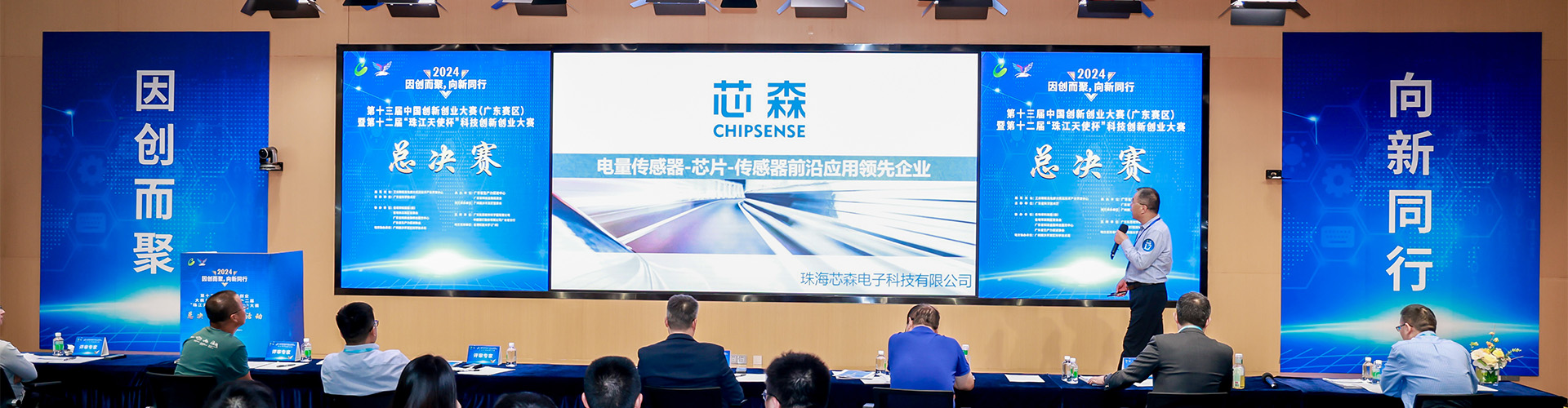
The dispute over measurement accuracy behind 136 million kilowatts
At the end of 2025, data released by the National Energy Administration brought the entire energy storage industry back into the spotlight: the national installed capacity of new energy storage reached 136 million kilowatts/351 million kilowatt-hours, an 84% increase compared to the end of 2024, and more than 40 times the capacity at the end of the "13th Five-Year Plan" period. In 2025, 66.43 GW/189.48 GWh of new capacity was added, with independent energy storage power plants accounting for 55.9% and energy storage integrated with new energy sources decreasing to 28.4%. The use of current sensors is also increasing.
This data reveals a crucial turning point: energy storage is transforming from a "supporting facility" for new energy sources to an independent "participant in the power market." The "Document No. 136" issued in 2025 abolished the mandatory energy storage requirement for new energy sources, pushing energy storage towards full market-based operation. Starting in 2026, every energy storage project must demonstrate its economic value through mechanisms such as power spot market trading, ancillary service compensation, and capacity pricing.
This transformation places unprecedented demands on the energy management accuracy of energy storage systems. In the power spot market, a 0.1% measurement error in charge and discharge volume can mean hundreds of thousands of yuan in annual revenue discrepancies; in grid-forming energy storage applications, the dynamic response speed of current measurement directly affects grid stability; and in industrial and commercial energy storage scenarios, accurate current data is fundamental for participating in virtual power plant aggregation and obtaining diversified revenue.
Current sensors, as the "sensing endpoints" of these applications, are evolving from a single Hall effect solution to a combination of Hall effect and TMR (Tunnel Magnetoresistance) technologies. CHIPSENSE current sensors are also among the many current sensor manufacturers in China.
Hall effect sensors are based on the Hall effect principle discovered in 1879 by American physicist Edwin Herbert Hall, enabling non-contact measurement by measuring the magnetic field strength generated by the current. After decades of technological advancements, Hall effect solutions have formed a mature product system in the energy storage field, including open-loop and closed-loop series. CHIPSENSE current sensors also include both of these types.
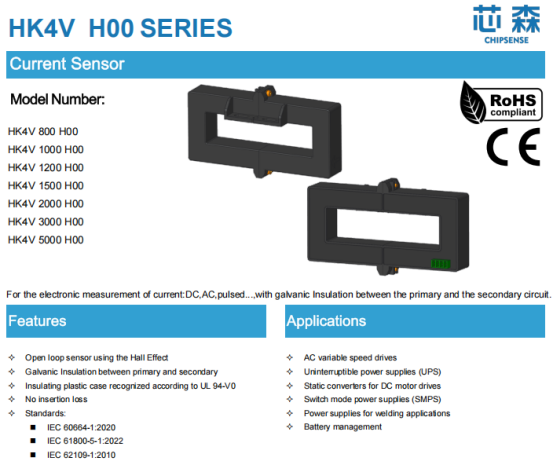
The open-loop Hall effect solution has a relatively simple structure, with the Hall element directly sensing the magnetic field in the air gap of the magnetic core. Its advantages include a wide bandwidth (up to 250kHz), fast dynamic response, and significant cost advantages. In energy storage applications in 2025, the open-loop solution will still dominate in cost-sensitive scenarios:
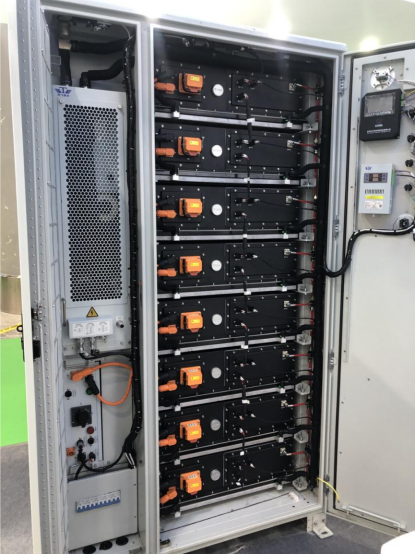
DC bus monitoring in large-scale energy storage power stations: The high-current range series (such as the 200-5000A specifications of CHIPSENSE HKxV series current sensors) can meet the current monitoring needs of 1500V high-voltage DC systems.
• Power circuit protection for grid-connected energy storage systems: High-bandwidth series (such as the 250kHz bandwidth of CHIPSENSE AN1V current sensors) can quickly capture current transients during the switching process of IGBT or SiC devices, used for over-current protection.
• Auxiliary equipment monitoring for commercial and industrial energy storage: Current monitoring of loads such as cooling pumps and fans does not require high accuracy, but is cost-sensitive, making open-loop solutions a clear advantage in terms of cost-effectiveness.
The closed-loop Hall effect solution utilizes a compensation coil to build a magnetic balance system, stabilizing the magnetic core's operating point at zero magnetic flux, achieving an accuracy of 0.3%-0.5%. Under the new demands of the energy storage market in 2025, the value of the closed-loop solution becomes even more prominent:
Electricity settlement for independent energy storage power stations: The arbitrage profit in the electricity spot market directly depends on the accurate measurement of charging and discharging volumes. High-precision series (such as CHIPSENSE CMxA series current sensor with 0.3% accuracy) can meet the data reliability requirements for commercial operation.
SOC estimation of large battery cells: 2025 is defined as the "first year of mass production of large energy storage battery cells," with 500Ah+ cells beginning to be delivered on a large scale. Larger capacity means longer charging and discharging cycles, and controlling the cumulative SOC error relies more on high-precision current measurement.
Battery cluster parallel balancing: Circulating current problems during parallel operation of multiple clusters in large energy storage systems accelerate the aging of some batteries. High-precision closed-loop sensors (such as CHIPSENSE CS3A series current sensors with 0.3% accuracy) can monitor and balance the current of each cluster in real time.
However, the technical limitations of the Hall effect solution are becoming increasingly apparent in the application scenarios of 2025. The sensitivity of Hall elements is relatively low (approximately 0.05mV/V/Oe), requiring the use of magnetic flux concentrators, which leads to increased size and power consumption. Their power consumption is typically in the 5-20mA range, and their temperature drift characteristics are also relatively poor, making it challenging to maintain accuracy across the entire temperature range (-40℃~105℃). This is a CHIPSENSE current sensor.
TMR (Tunnel Magnetoresistance) technology utilizes the tunnel magnetoresistance effect of magnetic multilayer film materials, achieving a sensitivity of up to 100mV/V/Oe, which is more than 2000 times higher than that of Hall effect sensors. This technological characteristic gives TMR sensors unique advantages in energy storage applications and is gradually penetrating from high-end applications into the mainstream market.
The dual breakthrough in accuracy and bandwidth is the most significant technological feature of the TMR solution. According to product data released by the industry in 2025, mainstream TMR closed-loop current sensors can achieve errors as low as ±0.06%FS, linearity of 0.05%FS, and response times in the nanosecond range, supporting MHz-level high-frequency signal detection. In contrast, traditional Hall effect sensors typically have an error of ±1% and a bandwidth usually below 250kHz. In this regard, the CHIPSENSE current sensor is a good choice.
In specific applications of energy storage systems in 2025, the advantages of TMR technology are reflected in:
Grid-forming energy storage requires fast control loops. 2025 is considered a pivotal year for grid-forming energy storage, transitioning from a technological option to a standard component of the power grid. Grid-forming energy storage needs to actively establish grid voltage, frequency, and inertia support, requiring control loop response speeds to increase from milliseconds to microseconds. TMR sensors, with their nanosecond response time and MHz bandwidth, can accurately capture rapidly changing current transients, providing reliable feedback signals for grid-forming control. Leading international manufacturers are launching TMR current sensor series in 2024-2025, specifically optimized for high-voltage energy storage battery monitoring and power control.
Waveform monitoring of SiC/GaN power devices. With the increasing penetration of silicon carbide (SiC) and gallium nitride (GaN) devices in energy storage PCS, switching frequencies are moving from the traditional 10-20kHz to above 50kHz. The current harmonics generated by high-frequency switching require sensors with sufficient bandwidth for accurate reproduction. The new generation of TMR sensors uses a dual-output design, providing both arc current detection (bandwidth 10k~120kHz) and conventional current measurement (bandwidth DC~500kHz), suitable for safety monitoring of photovoltaic strings and energy storage systems.
Wide temperature range stability. The outdoor deployment environment of energy storage systems requires sensors to maintain accuracy over a temperature range of -40℃ to 105℃ or even wider. Due to the use of a nanometer-thick oxide layer instead of semiconductor materials in the front-end module, TMR sensors have superior temperature performance compared to Hall effect solutions, with operating temperatures up to 200℃. Mainstream TMR products exhibit industry-leading temperature drift characteristics across the entire temperature range (-40℃ to 105℃), with a maximum effective measurement range of up to 6000A.
Power consumption and size optimization. TMR sensors have power consumption as low as 0.001~0.01mA, two orders of magnitude lower than Hall effect solutions (5-20mA). This feature is particularly important in distributed energy storage systems and energy harvesting applications. At the same time, TMR chip sizes can be as small as 0.5×0.5mm², providing space for increased power density in energy storage systems.
In the 2025 energy storage market, Hall and TMR technologies are not simply substitutes, but rather complement each other in different application scenarios.
Large-scale independent energy storage power plants (100MW class and above) represent the most typical scenario for current technology choices. The core requirements for these projects are a balance between high reliability and economic efficiency:
Battery Management System (BMS): High-precision current monitoring at the battery cluster level is required to support SOC estimation and energy billing. Both closed-loop Hall solutions (0.3% accuracy level) and TMR closed-loop solutions (±0.8% error level) can meet the requirements. Considering cost factors, Hall solutions still dominate at this stage, but the penetration rate of TMR solutions is rapidly increasing in newly built high-end projects. CHIPSENSE current sensors perform very well in this regard.
Energy Storage Converter (PCS) Power Circuit: Open-loop Hall solutions are still widely used in scenarios such as over-current protection due to their bandwidth advantages and cost competitiveness. However, in high-frequency PCS using SiC devices, the high bandwidth characteristics of TMR solutions are more attractive.
DC Side Insulation Monitoring: Leakage current sensors based on the fluxgate principle (such as the FR series in the document) are used to detect milliampere-level residual current to ensure system safety. The high sensitivity of TMR technology makes it perform better in weak current detection.
Commercial and industrial energy storage (1-10MW class) will face a fundamental shift in its profit model in 2025. With the adjustment of time-of-use electricity prices in many regions leading to a narrowing of peak-valley price differences, the simple peak-valley arbitrage model is unsustainable. The system needs to shift to a diversified revenue model of "spot trading + demand management + demand response + virtual power plant." This places dual requirements of high precision and intelligence on current sensors:
High-precision metering: Participating in the electricity spot market requires accurate charge and discharge data. The ±0.06%FS error level of the TMR solution can significantly reduce revenue losses caused by metering errors compared to the ±1% of the Hall solution.
Fast response: Virtual power plant aggregation requires energy storage systems to respond to dispatch commands in seconds or even milliseconds. The nanosecond response speed of TMR sensors provides the data foundation for rapid power control. As a rapidly emerging application scenario by 2025, energy storage systems for data centers have extremely high requirements for power supply reliability and power quality. The demand for current sensors in this type of scenario is concentrated in the following areas:
• High bandwidth: The transient nature of data center loads requires sensors capable of capturing rapidly changing currents.
• Low noise: High-precision power quality monitoring requires sensors with low noise characteristics.
• High reliability: TMR sensors can operate at temperatures up to 200℃, have strong anti-interference capabilities, and are more suitable for the high-power density environment of data centers. CHIPSENSE current sensors will be the preferred choice for customers.
The choice of technology route is never purely a technical decision. In the 2025 market environment, the cost gap between Hall and TMR solutions is narrowing, but a significant difference remains.
The advantage of the Hall solution lies in its mature supply chain and economies of scale. After decades of industrial development, the production process of Hall sensors is mature, there are numerous suppliers, and prices are already quite low. For cost-sensitive large-scale energy storage projects, the economics of the Hall solution remain attractive. CHIPSENSE current sensors offer high accuracy and high linearity.
The cost of the TMR solution is relatively higher; currently, high-performance TMR sensors on the market are typically 2-5 times the price of Hall sensors. However, the integration potential of TMR technology provides a path for cost reduction. TMR sensors do not require external magnetic concentrators or reset coils, reducing power consumption by 75%, and have smaller chip sizes. These characteristics can reduce unit costs during large-scale mass production. Major international sensor manufacturers are successively launching TMR product series for the energy storage market in 2024-2025, indicating the maturation of the supply chain and further cost reductions.
From a long-term perspective, as the penetration rate of TMR technology in the energy storage field increases, economies of scale will drive continuous cost reductions. Industry forecasts predict that the global magnetic sensor market will reach nearly $4.5 billion in 2027, with a compound annual growth rate of 9% from 2021 to 2027, driven primarily by automotive electrification and energy intelligence. With its performance advantages, TMR sensors are expected to gain a larger market share in this growth. Meanwhile, the use of CHIPSENSE current sensors will also increase.
Standing at the beginning of 2026, the technological evolution of energy storage current sensors shows several clear trends:
Intelligence and Digitalization: Traditional analog output sensors are being replaced by intelligent sensors with digital interfaces (such as SPI and I2C). The low power consumption characteristics of TMR technology make it more suitable for integrating functions such as self-calibration, temperature compensation, and fault self-diagnosis, reducing the complexity of external circuit design. In the digital architecture of energy storage systems, intelligent sensors can directly connect to BMS and energy management systems, supporting edge computing and predictive maintenance.
Multi-technology integration: In practical engineering applications, pure Hall or pure TMR solutions are evolving towards integrated solutions. For example, in scenarios requiring both high precision and high bandwidth, a hybrid architecture can be adopted, using TMR sensors as the precision measurement channel and Hall sensors as the fast protection channel. This "dual-redundancy" design is gaining increasing attention in large-scale energy storage power plants.
Standardization and certification: With the expanding scale of energy storage systems exported overseas (in 2025, Chinese energy storage companies received 366 GWh of new overseas orders, a year-on-year increase of 144%), current sensors need to pass international certifications such as UL, CE, and IEC, and adapt to the technical standards and environmental requirements of different markets. Due to their temperature stability and anti-interference capabilities, TMR sensors demonstrate advantages in the certification process in high-end markets such as Europe and the United States.
As an excellent current sensor manufacturer, CHIPSENSE has begun to receive widespread attention from customers.
Deep integration with power market mechanisms: With the release of the "Basic Rules for the Medium- and Long-Term Power Market" at the end of 2025, power users directly participating in market transactions will no longer be subject to government-mandated time-of-use electricity prices. Current measurement data from energy storage systems will be directly used for market transaction settlement, requiring sensors with higher measurement accuracy and data traceability, and potentially needing to meet specific metering certification requirements. The high-precision characteristics of TMR solutions are more in line with this trend. CHIPSENSE current sensors are continuously meeting market demands.
In 2025, China's new energy storage capacity exceeded 136 million kilowatts, marking the industry's transition from policy-driven to market-driven development. At this turning point, current sensors, as the most fundamental measurement components in energy storage systems, have a direct impact on the system's efficiency, safety, and economic viability.
Hall effect sensors, with their mature supply chain and cost advantages, still dominate the current market, especially in cost-sensitive large-scale energy storage power plants and commercial and industrial energy storage scenarios.The CHIPSENSE current sensor is also like this. However, TMR technology, with its high sensitivity, high accuracy, low power consumption, and excellent temperature drift characteristics, is rapidly penetrating the high-end application market and demonstrating irreplaceable technical advantages in emerging scenarios such as grid-forming energy storage, SiC/GaN power systems, and virtual power plant aggregation.
Technological evolution is never a simple either/or replacement, but rather a scenario-based choice. In the energy storage market of 2026, both Hall and TMR technologies will coexist in different application scenarios, jointly promoting the improvement of energy management accuracy in energy storage systems. For energy storage system integrators, understanding the performance boundaries and applicable scenarios of both technologies and matching them with system architecture, control strategies, and business models is the technical foundation for achieving product competitiveness. Domestically produced CHIPSENSE current sensors are on the rise.
With the deepening of power market reforms and the advancement of new power system construction, the role of energy storage systems will evolve from simple energy storage units to intelligent energy nodes. In this process, current sensors—whether Hall or TMR—will continue to play an irreplaceable role, becoming a crucial link connecting the physical and digital worlds.
CHIPSENSE is a national high-tech enterprise that focuses on the research and development, production, and application of high-end current and voltage sensors, as well as forward research on sensor chips and cutting-edge sensor technologies. CHIPSENSE is committed to providing customers with independently developed sensors, as well as diversified customized products and solutions.
“CHIPSENSE, sensing a better world!
www.chipsense.net